
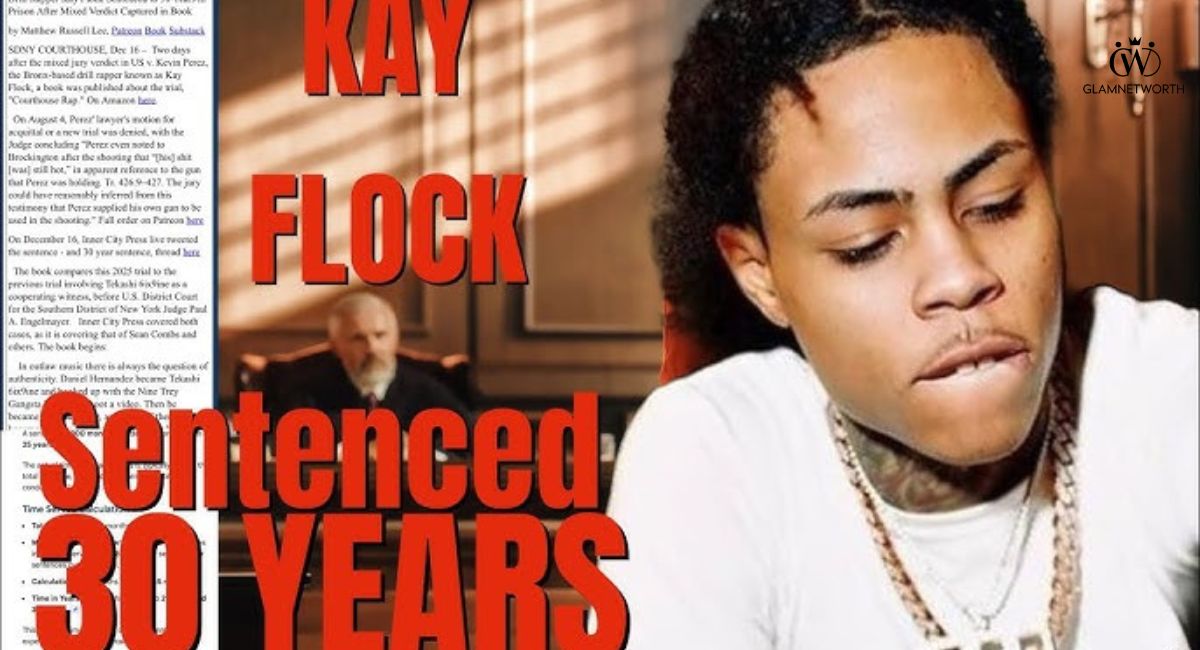
What Happened with the Kay Flock Sentence?
The Kay Flock sentence has sent shockwaves through the hip-hop and drill rap communities. Kevin Perez, known professionally as Kay Flock, was a rising star in the Bronx drill scene, celebrated for his raw energy and unfiltered lyricism. However, his meteoric rise came to a sudden halt after multiple violent incidents tied to his activities outside the music world led to serious criminal charges.
In December 2025, Perez was sentenced to 30 years in federal prison, marking one of the most significant legal outcomes for a young artist in recent hip-hop history. This sentence stems from a complex federal case involving racketeering, gang-related violence, and shootings linked to the Sev Side/DOA gang in the Bronx. The ruling underscores the serious consequences of criminal behavior, even for artists with immense public profiles.
Fans, critics, and the media have been debating the Kay Flock sentence ever since, with many wondering how a young rapper’s career could derail so dramatically. This case is about more than music; it’s about law, culture, and the intersection of street life with fame.
Who Is Kay Flock and Why It Matters
Understanding the Kay Flock sentence starts with understanding who Kay Flock is. Born Kevin Perez, he gained recognition for his energetic and aggressive drill tracks that reflected life in high-crime areas of the Bronx. His early releases, including “The D.O.A. Tape,” quickly earned him a national audience, making him one of the most promising talents in New York drill music.
Drill rap often walks a fine line between storytelling and glorification of violence. Kay Flock’s music vividly described street life and rivalries, which resonated with fans but also attracted scrutiny from authorities. Law enforcement noted that his songs, videos, and social media activity sometimes mirrored real-world conflicts, which became central to the prosecution’s arguments in court.
For the music world, the Kay Flock sentence is a warning: even lyrics and online posts can be scrutinized if they align with criminal activity. It raises questions about how much artistic freedom exists when real-life actions are involved, especially in a genre like drill that thrives on authenticity.
The Criminal Charges Leading to the Kay Flock Sentence

The charges that led to the Kay Flock sentence were severe. Perez was arrested in December 2021 after being linked to a fatal shooting in Manhattan. Authorities alleged he was a leader in a Bronx street gang and involved in a string of violent incidents, including shootings and attempted murders, between 2020 and 2021.
Federal prosecutors used racketeering (RICO) laws to build their case. This allowed them to connect Perez’s alleged gang leadership, music promotion, and violent acts into a single legal framework. The prosecution argued that he not only participated in violence but also encouraged it through his music and social media presence, amplifying tensions with rival crews.
Defense attorneys tried to mitigate the sentence by arguing that Perez grew up in a dangerous environment and suffered from intellectual disabilities. However, the court rejected these claims. In the end, the jury found him guilty of multiple counts, including racketeering conspiracy, attempted murder in aid of racketeering, assault with a deadly weapon, and firearm charges. He was acquitted of murder in aid of racketeering, which could have resulted in a life sentence.
The outcome of this trial is now widely recognized as a pivotal moment in how the legal system addresses artists linked to gang activity.
Details of the 30-Year Kay Flock Sentence
The Kay Flock sentence of 30 years in federal prison was handed down on December 16, 2025. The judge emphasized the severity of Perez’s actions and the influence he had on gang activity in the Bronx. While the prosecution had sought as much as 50 years, the final sentence balanced his youth with the gravity of his crimes.
During sentencing, the court highlighted that Perez had previously celebrated violent acts publicly, including social media posts that appeared to incite further violence. These factors contributed to the long sentence, alongside the violent impact his actions had on the community.
In addition to 30 years behind bars, Perez received five years of supervised release after completing his prison term. This means he will remain under strict federal supervision, and any violations could lead to additional legal consequences.
The Kay Flock sentence not only ends his current career trajectory but also sets a precedent in how courts handle cases involving artists whose real-life actions intersect with their music.
Impact on Music and Drill Culture
The Kay Flock sentence has sparked heated debate in the music industry. Drill rap, often criticized for its violent content, now faces increased scrutiny regarding how lyrics and social media activity may be interpreted legally. Fans argue that music should not be criminalized, while authorities see it as a tool for documenting and sometimes promoting real-world violence.
Artists and producers are now more cautious about content that could be linked to criminal behavior. The case has become a reference point for conversations about artistic expression versus legal responsibility. Drill music thrives on authenticity, but the Kay Flock sentence demonstrates that there are boundaries when artistic content overlaps with illegal actions.
Furthermore, the ruling may influence upcoming trials for other young artists with similar backgrounds, potentially reshaping how the music industry navigates legal and social responsibilities.
What the Sentence Means for Kay Flock’s Future
A 30-year federal sentence means Perez will be in his early 50s before he can regain freedom. His music career, at least for now, is effectively paused indefinitely. While federal prison offers rehabilitation programs, they cannot replace the lost time, opportunities, and momentum of a young artist in his prime.
Lawyers have indicated that appeals or mitigation efforts could be pursued, but such measures rarely result in significant reductions once a federal sentence is finalized. Fans will likely continue following his story, but the Kay Flock sentence has clearly reshaped the landscape of his personal and professional future.
For Perez, this case also serves as a stark reminder of the legal risks tied to actions outside the studio. The combination of gang involvement, violent acts, and social media promotion of conflict has resulted in one of the most dramatic career-halting rulings in hip-hop history.
Broader Legal and Cultural Implications
The Kay Flock sentence goes beyond one individual. It reflects a broader legal trend of holding artists accountable when their personal conduct intersects with crime. RICO statutes, originally designed for organized crime, are increasingly applied to street gangs and related activities, making it possible to connect online presence and musical content to criminal liability.
This case raises important questions about free speech, artistic freedom, and responsibility. When does storytelling cross the line into evidence of intent or participation in criminal activity? Kay Flock’s sentence shows that courts are willing to impose significant consequences when these lines are crossed.
As the hip-hop world watches, the Kay Flock sentence will likely continue to influence debates around drill music, the responsibility of artists, and the legal system’s role in policing violent content.
Conclusion:
The Kay Flock sentence is a landmark moment in hip-hop and the drill music scene. It demonstrates the severe consequences of criminal involvement, even for young artists with promising careers. Beyond prison time, this ruling sparks a wider conversation about music, violence, and accountability, serving as a cautionary tale for emerging artists and the broader industry.
FAQs
1. What did Tay K get sentenced to?
Tay K was sentenced to 55 years in prison for his role in a 2016 murder.
2. What did Kay O get sentenced for?
Kay O was sentenced for drug trafficking and related firearm charges (exact details vary by case).
3. When was Kay Flock charged?
Kay Flock was first charged in December 2021 following a deadly shooting in Manhattan.
4. What is Kay Flock’s most popular song?
His most popular song is “Being Honest”, which gained massive streams in the drill scene.
5. Who is #1 on YouTube right now?
YouTube rankings fluctuate daily, but currently MrBeast or Bad Bunny often hold top positions depending on trending metrics.
You May Also Read

wellcome to glamnetworth i am rimsha razzaq and AI-Powered SEO , and containt writer with four years of experince i help website rank higher, grow traffic, and look amazing . my goal is to make SEO and web design simple and effective for everyone . Lets achieve more together|