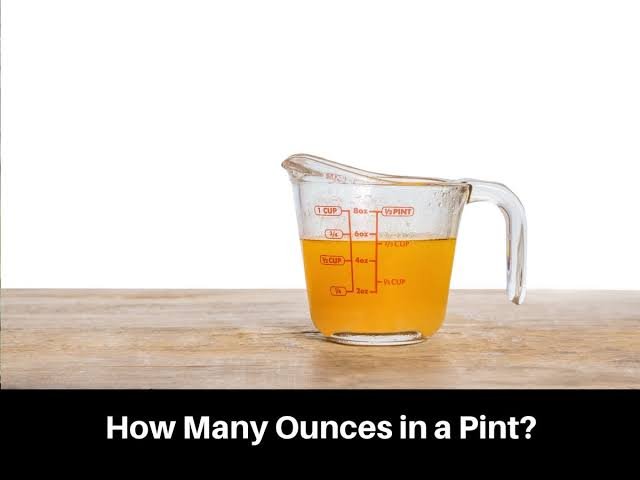

If you have ever followed a recipe and suddenly wondered, “How many ounces are in a pint?”, you are definitely not alone. This is one of those simple kitchen measurements that can become confusing because the answer depends on whether you are measuring a liquid or a dry ingredient, and which measurement system you are using.
For everyday cooking in the United States, the most common answer is 16 fluid ounces in 1 US liquid pint. That is the measurement most American recipes mean when they refer to a pint of milk, cream, water, juice, or another liquid.
However, there is more to the story. A pint is a unit of volume, while an ounce can refer to either fluid volume or weight. The difference matters, especially when you are baking or working with ingredients that have different densities. In this guide, we will explain exactly how many ounces are in a pint, how to convert pints to ounces, and how US and UK measurements differ.
How Many Ounces Are in a Pint?
In the United States, 1 liquid pint equals 16 fluid ounces. This is the standard conversion used for many common recipes and kitchen measurements.
So, if a recipe asks for one pint of water, you can measure it as 16 fluid ounces. Likewise, two pints equal 32 fluid ounces, while half a pint equals 8 fluid ounces.
The basic conversion is easy to remember:
1 US liquid pint = 16 US fluid ounces
This measurement is particularly useful when a recipe gives you a quantity in pints but your measuring cup or bottle is marked in fluid ounces. Instead of guessing, you can simply multiply the number of pints by 16.
For example, if you have 3 pints of liquid:
3 × 16 = 48 fluid ounces
Therefore, 3 US liquid pints contain 48 fluid ounces.
What Is a Pint?
A pint is a unit of volume used to measure liquids and, in some contexts, dry goods. It is commonly associated with cooking, beverages, and food packaging.
In the United States, the liquid pint is equal to two cups. Since one US cup contains 8 fluid ounces, the calculation is straightforward: 2 cups × 8 fluid ounces = 16 fluid ounces.
A pint is also one-half of a US liquid quart. A quart contains 32 fluid ounces, so dividing that amount by two gives you 16 fluid ounces per pint.
The word “pint” can sometimes cause confusion because its exact volume is not the same everywhere. The US pint and Imperial pint used in the United Kingdom are different sizes. This difference becomes important when you are reading recipes from another country or converting international measurements.
How Many Fluid Ounces Are in a US Pint?
A US liquid pint contains 16 US fluid ounces. This is the conversion you will usually need for American recipes.
The term “fluid ounce” is important here. A fluid ounce measures volume, not weight. That means 16 fluid ounces tells you how much space the liquid occupies rather than how heavy it is.
For example, if you measure 1 US pint of milk, you have 16 fluid ounces by volume. If you measure 1 US pint of water, you also have 16 fluid ounces by volume. The ingredients may have different weights because their densities are different, but the volume measurement remains the same.
This distinction is especially important in baking. If a recipe calls for 16 fluid ounces of a liquid, you should generally measure it using a liquid measuring cup or another volume-based measurement rather than assuming it weighs 16 ounces.
How Many Ounces Are in Half a Pint?
Half of a US liquid pint is 8 fluid ounces.
Because one pint contains 16 fluid ounces, dividing it by two gives:
16 ÷ 2 = 8 fluid ounces
This also means half a pint is equal to 1 US cup, because a standard US cup contains 8 fluid ounces.
Half-pint measurements are common in recipes, beverages, sauces, dairy products, and other kitchen situations. If you do not have a container marked with a half-pint measurement, you can simply use one standard measuring cup for most liquid ingredients.
Understanding these smaller conversions makes cooking much easier because you can move between pints, cups, and fluid ounces without needing to stop and search for a conversion every time.
How Many Ounces Are in 2 Pints?
Two US liquid pints contain 32 fluid ounces.
The calculation is:
2 pints × 16 fluid ounces = 32 fluid ounces
Two pints are also equal to 1 US liquid quart. This provides another easy way to remember the conversion.
For example, suppose a recipe requires 2 pints of broth. If your measuring container is marked in fluid ounces, you need 32 fluid ounces of broth.
The same calculation works for other amounts. Three pints equal 48 fluid ounces, four pints equal 64 fluid ounces, and five pints equal 80 fluid ounces.
Pint to Ounce Conversion Chart
If you regularly cook or bake, having a quick conversion chart can save time. Here are some common US liquid pint conversions:
| Pints | Fluid Ounces |
|---|---|
| ¼ pint | 4 fl oz |
| ½ pint | 8 fl oz |
| 1 pint | 16 fl oz |
| 1½ pints | 24 fl oz |
| 2 pints | 32 fl oz |
| 3 pints | 48 fl oz |
| 4 pints | 64 fl oz |
| 5 pints | 80 fl oz |
| 6 pints | 96 fl oz |
| 8 pints | 128 fl oz |
The easiest formula is simply:
Fluid ounces = pints × 16
If you are going in the opposite direction, use:
Pints = fluid ounces ÷ 16
For example, 40 fluid ounces divided by 16 equals 2.5 pints.
How Many Cups Are in a Pint?
One US liquid pint equals 2 cups.
Since one US cup contains 8 fluid ounces, you can see how the measurements connect:
1 pint = 2 cups = 16 fluid ounces
This is one of the most useful kitchen conversions to remember.
If you only have measuring cups available, you do not necessarily need a pint-sized container. You can measure one pint of liquid by using two standard 1-cup measures.
Likewise, half a pint is 1 cup, one-quarter pint is ½ cup, and two pints are 4 cups. These simple relationships are particularly useful when scaling recipes up or down.
US Pint vs. UK Imperial Pint
One of the biggest sources of confusion is the difference between a US pint and a UK Imperial pint.
A US liquid pint contains 16 US fluid ounces, while an Imperial pint contains 20 Imperial fluid ounces. An Imperial pint is also larger in terms of actual volume.
The Imperial pint is approximately 568 milliliters, while the US liquid pint is approximately 473 milliliters. Therefore, you should not automatically substitute a US pint for a UK pint when following an international recipe.
This distinction matters when reading recipes, beverage measurements, historical recipes, and instructions from British sources. Always check which measurement system the recipe uses before converting quantities.
If a British recipe says “one pint,” it generally means an Imperial pint. If an American recipe says “one pint,” it generally means a US pint.
Are Fluid Ounces the Same as Ounces?
No. Fluid ounces and ounces are different types of measurements.
A fluid ounce measures volume, while a regular ounce, often called an avoirdupois ounce, measures weight or mass. This difference can be easy to overlook because both use the word “ounce.”
For liquids, you will commonly see fl oz on measuring cups, bottles, and recipes. These measurements tell you the volume of the liquid.
For solid ingredients, ounces may refer to weight. For example, 8 ounces of flour by weight does not necessarily occupy the same volume as 8 fluid ounces of water.
This is why saying “a pint equals 16 ounces” without clarification can sometimes be misleading. The accurate statement for everyday US liquid measurement is 1 US liquid pint equals 16 US fluid ounces.
How to Convert Pints to Fluid Ounces
Converting pints to fluid ounces is very simple when you are using the US liquid measurement system.
Start with the number of pints and multiply it by 16.
Formula:
Pints × 16 = Fluid Ounces
Here are a few examples:
1 pint:
1 × 16 = 16 fluid ounces
2 pints:
2 × 16 = 32 fluid ounces
2.5 pints:
2.5 × 16 = 40 fluid ounces
4 pints:
4 × 16 = 64 fluid ounces
The reverse conversion is just as easy. If you know the number of fluid ounces and want to find pints, divide by 16.
For example:
48 fluid ounces ÷ 16 = 3 pints
Once you remember the number 16, most everyday pint-to-ounce calculations take only a few seconds.
How Many Ounces Are in a Pint of Different Ingredients?
A pint always represents a particular volume within a measurement system, but the weight of a pint can vary depending on the ingredient.
For example, a pint of water and a pint of cooking oil occupy the same volume if both are measured as US liquid pints. However, they do not necessarily weigh the same because water and oil have different densities.
This is why you should be careful when a recipe switches between volume and weight measurements. A pint of flour is not equivalent to 16 ounces of flour by weight simply because a pint contains 16 fluid ounces.
For liquids, the easiest approach is to use fluid-ounce or cup measurements. For solid ingredients, especially when precision matters, a kitchen scale can provide a more reliable measurement.
Why Pint-to-Ounce Conversions Matter in Cooking
Knowing how many ounces are in a pint can make everyday cooking much more convenient. Recipes often use different measurement systems depending on where they were created, and being able to convert between them helps prevent mistakes.
Imagine finding a recipe that calls for one pint of cream, but your measuring jug only shows fluid ounces. Knowing that a US liquid pint is 16 fluid ounces means you can measure the correct quantity immediately.
It is also useful when doubling or reducing recipes. If a soup recipe calls for 2 pints of broth and you want to make half the recipe, you know that you need 1 pint, or 16 fluid ounces.
These conversions are especially helpful for home cooks who use recipes from different websites, cookbooks, or countries. A little measurement knowledge can make the entire cooking process smoother.
Common Mistakes When Measuring Pints and Ounces
One common mistake is assuming that every pint contains exactly 16 ounces regardless of the country. As discussed earlier, the US liquid pint and Imperial pint are different measurements.
Another mistake is confusing fluid ounces with ounces by weight. Although both use the word “ounce,” they measure different things. This can lead to inaccurate results when measuring ingredients such as flour, sugar, butter, or other solids.
People also sometimes assume that a pint always has the same weight. It does not. The weight depends on the ingredient’s density. Volume and weight are related, but they are not interchangeable measurements.
The easiest way to avoid these mistakes is to identify the type of measurement first. Ask whether the recipe is using a US liquid pint, Imperial pint, dry pint, fluid ounces, or weight ounces. Once you know that, the conversion becomes much clearer.
Quick Answer: How Many Ounces in a Pint?
For most everyday American cooking:
1 US liquid pint = 16 US fluid ounces
You can also remember these related conversions:
½ pint = 8 fluid ounces = 1 cup
1 pint = 16 fluid ounces = 2 cups
2 pints = 32 fluid ounces = 1 quart
4 pints = 64 fluid ounces = 2 quarts
These are the measurements you will encounter most often in US recipes and kitchen instructions.
Final Thoughts on How Many Ounces Are in a Pint
So, how many ounces are in a pint? The straightforward answer is 16 fluid ounces in one US liquid pint. This is the standard conversion you should use for most American recipes involving liquids.
The important thing is to remember that measurement systems can vary. A US pint is not the same size as a UK Imperial pint, and fluid ounces are not the same thing as ounces by weight. Understanding those differences will help you avoid confusion when cooking, baking, shopping, or converting recipes.
For quick reference, keep this simple formula in mind:
Pints × 16 = US fluid ounces
Once you memorize that, converting pints to ounces becomes almost effortless. Whether you are measuring milk for a recipe, calculating the amount of broth for a soup, or adjusting a drink recipe, knowing the relationship between pints and fluid ounces is a small piece of kitchen knowledge that can save you a lot of time and prevent measurement mistakes.

wellcome to glamnetworth i am rimsha razzaq and AI-Powered SEO , and containt writer with four years of experince i help website rank higher, grow traffic, and look amazing . my goal is to make SEO and web design simple and effective for everyone . Lets achieve more together|
