
Introduction
The DowJones Industrial Average (DJIA), commonly known as the DowJones or simply the Dow, is one of the most famous stock market indexes in the world. Every day, investors, financial analysts, and news organizations closely monitor its movements to understand how the U.S. stock market is performing. Whether the Dow Jones rises or falls, its performance often becomes headline news because it reflects the strength of many of America’s largest companies.
For beginners, the Dow Jones may seem confusing at first. Many people think it represents the entire stock market, but in reality, it tracks the performance of just 30 major publicly traded companies. Despite its relatively small number of companies, the index remains one of the most trusted indicators of market sentiment and economic confidence.
In this guide, you’ll learn what the Dow Jones is, how it works, how it is calculated, why investors follow it, and how it compares to other popular market indexes. By the end, you’ll have a solid understanding of why the Dow Jones continues to be one of the most influential financial benchmarks in the world.
what Is the Dow Jones?
The DowJones Industrial Average is a stock market index that measures the performance of 30 large, well-established U.S. companies. It was created to give investors a simple snapshot of how major American businesses are performing.
Unlike some other indexes that include hundreds or even thousands of companies, the DowJones focuses on industry-leading corporations across various sectors. These businesses are considered financially strong and have long histories of success.
Today, the DowJones serves as one of the primary indicators of the health of the U.S. economy. Investors around the globe pay attention to its daily movements because they often reflect broader economic trends and investor confidence.
The History of the DowJones
The DowJones Industrial Average was introduced in 1896 by financial journalist Charles Dow, who co-founded DowJones & Company. Originally, the index consisted of only 12 industrial companies, representing America’s rapidly growing manufacturing economy.
As the U.S. economy evolved, the index expanded. In 1928, it increased to 30 companies, a number that remains unchanged today. Over time, industries like technology, healthcare, and finance replaced many traditional manufacturing businesses.
Throughout history, the DowJones has witnessed major events including the Great Depression, World War II, the dot-com bubble, the 2008 financial crisis, the COVID-19 market crash, and many periods of economic expansion. Each event has shaped the index and reinforced its importance in global financial markets.
How the Dow Jones Works
Unlike many stock indexes, the DowJones is a price-weighted index. This means companies with higher stock prices have a greater influence on the movement of the index, regardless of their overall company size.
For example, if a company with a stock price of $500 rises by $10, it has a bigger effect on the Dow than a company trading at $100 with the same increase. This calculation method makes the Dow unique compared to other indexes.
The index uses a mathematical figure called the Dow Divisor to adjust for stock splits, dividends, and corporate changes. This ensures that changes in stock prices accurately reflect market performance without creating artificial jumps in the index.
Companies Included in the DowJones
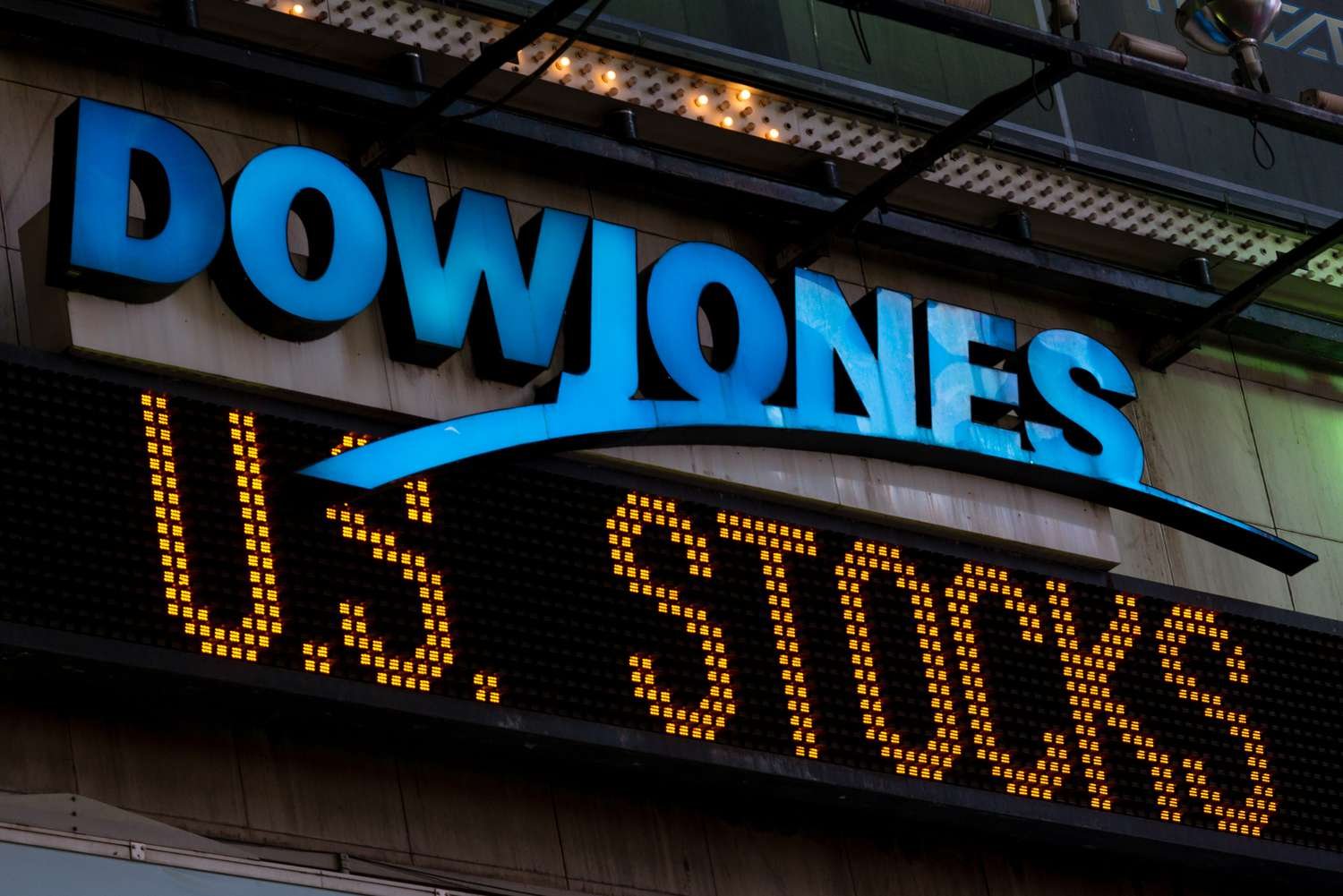
:max_bytes(150000):strip_icc()/GettyImages-2175725044-87e4b27dd71c4da29b2816b9e6079d83.jpg)
The DowJones includes 30 of America’s largest and most influential companies. These businesses come from multiple industries, helping the index represent different parts of the U.S. economy.
Companies in the Dow are carefully selected based on their reputation, financial stability, market leadership, and importance to the economy. Membership is reviewed occasionally, and companies can be replaced as industries evolve.
Some well-known sectors represented include technology, healthcare, financial services, consumer goods, retail, and industrial manufacturing. The goal is to maintain an index that reflects the changing landscape of American business.
Why Investors Follow the Dow Jones
Investors use the DowJones as a quick measure of overall market sentiment. When the index rises significantly, it usually signals optimism about economic growth and corporate earnings. A falling Dow often reflects uncertainty or concerns about the economy.
Financial media frequently report the Dow’s daily gains or losses because it provides an easy-to-understand snapshot of market performance. Even people who don’t actively invest often recognize the Dow as a symbol of the stock market.
Professional investors don’t rely solely on the DowJones when making investment decisions, but they use it alongside other indicators to evaluate trends, compare portfolio performance, and assess market direction.
Dow Jones vs. Other Major Stock Market Indexes
The DowJones is often compared with the S&P 500 and the Nasdaq Composite. While all three measure stock market performance, they do so in different ways.
The DowJones tracks only 30 companies and uses a price-weighted system. The S&P 500 includes 500 large U.S. companies and uses market capitalization weighting, making it a broader measure of the economy. Meanwhile, the Nasdaq Composite contains thousands of stocks, with a strong focus on technology companies.
Because of these differences, each index tells a slightly different story about the market. Many investors monitor all three to gain a more complete understanding of overall market conditions rather than relying on just one benchmark.
Factors That Affect the Dow Jones
Many factors influence the movement of the DowJones on a daily basis. Corporate earnings reports are among the biggest drivers. When major companies report strong profits, their stock prices often increase, lifting the index.
Economic data also plays a major role. Reports on inflation, employment, GDP growth, interest rates, and consumer spending can significantly impact investor confidence and stock prices.
Global events such as geopolitical tensions, government policies, natural disasters, and financial crises may also create market volatility. Investor psychology, including fear and optimism, can cause rapid changes in the Dow Jones even without major economic news.
Advantages and Limitations of the Dow Jones
One of the biggest strengths of the Dow Jones is its simplicity. Because it includes only 30 major companies, it is easy for investors and the general public to understand. It has more than a century of historical data, making it valuable for long-term market analysis.
Another advantage is that the companies included are generally industry leaders with strong financial records. Their performance often reflects important trends in the broader economy.
However, the Dow Jones also has limitations. Since it tracks only 30 companies, it cannot fully represent the entire U.S. stock market. Its price-weighted calculation method can also produce results that some analysts believe are less accurate than market-cap-weighted indexes like the S&P 500.
Should Beginners Pay Attention to the Dow Jones?
For new investors, the Dow Jones is an excellent starting point for understanding the stock market. Watching its daily performance helps beginners become familiar with how markets respond to economic news, earnings reports, and global events.
However, beginners should remember that investing decisions should never be based solely on the Dow’s daily movements. Long-term investing requires research, diversification, and patience rather than reacting to short-term market fluctuations.
Learning about the Dow Jones also provides a strong foundation for understanding other investment concepts, including ETFs, mutual funds, index funds, and retirement investing.
The Future of the Dow Jones
The Dow Jones has evolved significantly since its creation more than a century ago, and it will likely continue to change as the economy develops. New industries such as artificial intelligence, renewable energy, and advanced technology may become increasingly represented in the index over time.
As companies grow, merge, or decline, the composition of the Dow Jones will continue to adapt. This flexibility helps ensure that the index remains relevant despite changing economic conditions.
Although new financial tools and indexes continue to emerge, the Dow Jones is expected to remain one of the world’s most recognized indicators of stock market performance because of its history, credibility, and influence.
Conclusion
The Dow Jones Industrial Average remains one of the most respected stock market indexes in the world. While it tracks only 30 companies, these businesses represent some of the strongest and most influential corporations in the United States. Its long history and widespread recognition make it a valuable tool for investors, economists, journalists, and policymakers.
Understanding how the Dow Jones works can help investors interpret financial news, recognize market trends, and make more informed investment decisions. Although it should not be the only indicator used when evaluating the stock market, it continues to serve as an important benchmark for measuring economic confidence and corporate performance.
Whether you’re just beginning your investment journey or expanding your financial knowledge, learning about the Dow Jones is an essential step toward understanding how global financial markets operate.
Frequently Asked Questions (FAQs)
What is the Dow Jones?
The Dow Jones Industrial Average (DJIA) is a stock market index that tracks the performance of 30 large, publicly traded U.S. companies.
Why is the Dow Jones important?
It serves as one of the most recognized indicators of the overall health of the U.S. stock market and investor confidence.
How is the Dow Jones calculated?
The Dow Jones is a price-weighted index, meaning companies with higher stock prices have a greater impact on the index’s movement.
Is the Dow Jones the same as the stock market?
No. The Dow Jones represents only 30 major companies and is one of several indexes used to measure stock market performance.
Can beginners invest in the Dow Jones?
You cannot invest directly in the Dow Jones, but you can invest in index funds or ETFs that are designed to track its performance.
YOU MAY ALSO READ

wellcome to glamnetworth i am rimsha razzaq and AI-Powered SEO , and containt writer with four years of experince i help website rank higher, grow traffic, and look amazing . my goal is to make SEO and web design simple and effective for everyone . Lets achieve more together|