
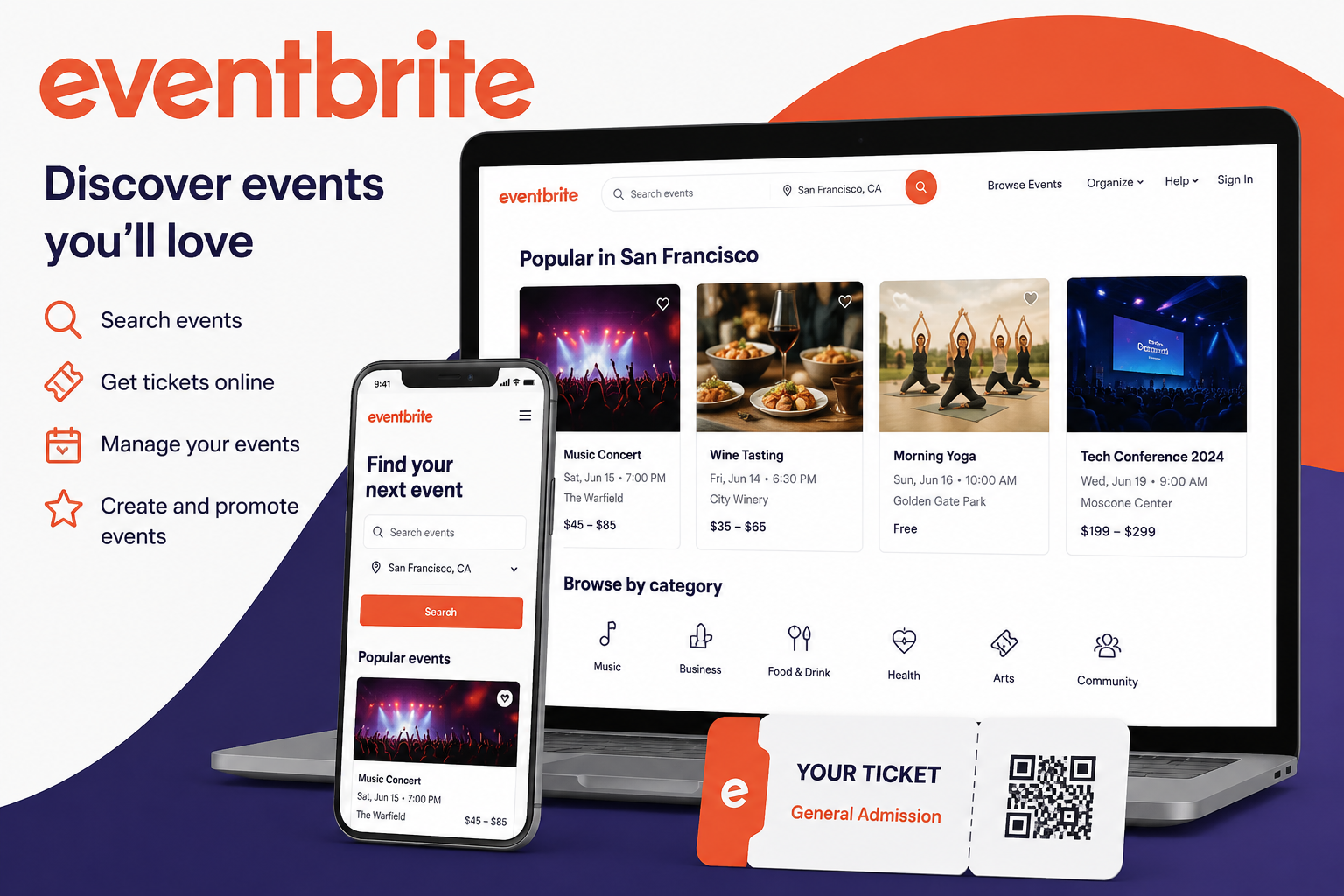
Eventbrite Finding something fun to do used to mean checking newspapers, asking friends, or searching through dozens of different websites. Today, event discovery has become much easier. Eventbrite has grown into one of the best-known platforms for discovering events, selling tickets, and organizing experiences online.
Whether someone wants to attend a local concert, join a business conference, take a cooking class, or organize a community gathering, Eventbrite provides tools for both attendees and organizers. Its broad range of event categories makes it useful for people with very different interests.
The platform is also important for event creators. Instead of managing registrations through spreadsheets and handling payments manually, organizers can use digital tools to publish events, promote them, sell tickets, and communicate with attendees.
This guide explains what Eventbrite is, how it works, what people can do on the platform, and why it has become such a recognizable name in the online events industry.
What Is Eventbrite?
Eventbrite is an online event management and ticketing platform that connects event organizers with people looking for experiences. The service allows organizers to create event pages, promote their events, manage registrations, and sell tickets online.
The idea behind the platform is fairly straightforward. An organizer creates an event and provides information such as the date, location, description, ticket options, and pricing. Potential attendees can then discover the event and register or purchase tickets through the platform.
Eventbrite covers a wide range of experiences. These can include concerts, festivals, workshops, networking events, conferences, classes, food experiences, charity events, and community gatherings. Because the platform serves many categories, users can discover events that match their interests.
For attendees, the service works like a digital event marketplace. For organizers, it acts more like an event-management toolkit. That combination is one of the reasons the platform has remained relevant in an increasingly digital events market.
How Does Eventbrite Work?
Using Eventbrite usually begins with discovering an event. Visitors can search for events based on location, date, category, or personal interests. This makes it easier to narrow down thousands of possible experiences.
Once someone finds an interesting event, the event page provides important information. Depending on the organizer, visitors may see the schedule, venue details, ticket prices, event description, speaker information, and other useful details.
If registration is required, the attendee can select an available ticket or registration option. Some events may be free, while others require payment. The exact registration process depends on how the organizer has configured the event.
After registration, attendees can generally access their event information digitally. Organizers can also use the platform to communicate important updates, making the entire process more convenient than traditional paper-based registration systems.
Discovering Events on Eventbrite
One of the biggest advantages of Eventbrite is event discovery. Instead of visiting individual websites for every concert, workshop, seminar, or local activity, users can browse many options through one platform.
Location plays an important role in event discovery. Someone searching for activities in a particular city can find events happening nearby. This can be especially useful for people who have recently moved to a new area or are visiting a city for a short period.
Categories make discovery even easier. Users may find business events, technology meetups, fitness activities, arts programs, educational workshops, music performances, food events, and social gatherings. The variety gives users plenty of opportunities to explore something outside their normal routine.
Event discovery can also introduce people to smaller organizers. A local workshop or independent creator may not have the marketing budget of a large company. Platforms such as Eventbrite can give those organizers another way to reach potential attendees.
Creating an Event on Eventbrite
Creating an event requires organizers to provide the essential details attendees need before deciding whether to register. A strong event page should clearly explain what the event is, who it is for, when it takes place, and what participants can expect.
The event title is particularly important because it is often the first thing potential attendees notice. A clear and specific title can communicate the purpose of an event much faster than a vague or overly creative name.
Organizers can also add descriptions, images, dates, locations, ticket types, and other event information. These details help visitors understand the experience before making a registration decision.
A well-designed event page can also improve credibility. When attendees see clear information, professional images, accurate schedules, and transparent pricing, they are more likely to feel comfortable registering.
Eventbrite for Ticket Sales
Ticketing is one of the platform’s central functions. Organizers can create different ticket options depending on the structure of their event. For example, an event might have early-bird tickets, standard admission, VIP access, or free registration.
Digital ticketing reduces the amount of administrative work organizers need to handle themselves. Instead of collecting payments through separate methods and maintaining multiple spreadsheets, the event information can be managed through one online system.
Ticket availability can also create a sense of urgency. If an organizer limits the number of tickets in a particular category, potential attendees can see that availability may change as the event approaches.
For attendees, online ticketing is convenient because registration can be completed before arriving at the venue. This can make event entry smoother and reduce the need for paper tickets or manual registration lists.
Eventbrite for Event Organizers
Event organizers often have to manage many moving parts at once. Marketing, ticket sales, attendee communication, registration, scheduling, and venue coordination can quickly become complicated.
Eventbrite brings several of these tasks into one digital environment. Organizers can publish event information, manage registrations, monitor ticket activity, and communicate with participants.
The platform can be particularly useful for small businesses, independent creators, nonprofit organizations, community groups, and individuals who do not have dedicated event-management teams.
However, technology alone does not make an event successful. Organizers still need a compelling concept, accurate information, good customer service, and effective promotion. Eventbrite provides tools, but the quality of the event ultimately depends on the organizer.
Marketing and Promoting Events
Creating an event is only the beginning. An organizer also needs to attract the right audience. Event promotion can involve social media, email marketing, partnerships, search visibility, community outreach, and other channels.
A strong event description should answer the questions a potential attendee is likely to have. People want to know what they will experience, who will be there, where the event takes place, how much it costs, and why it is worth attending.
Visual content can also influence interest. Professional photographs, graphics, speaker images, or videos can make an event page more appealing. The goal is to give visitors a clear idea of what they can expect.
Promotion should also begin early enough to build awareness. Waiting until the final few days may limit the number of people who discover the event. A thoughtful promotional campaign can gradually turn awareness into registrations.
Eventbrite for Businesses and Professionals
Businesses can use event platforms for more than traditional public gatherings. Professional organizations may host conferences, seminars, networking sessions, training programs, product presentations, and educational events.
For businesses, events can become a useful way to build relationships with customers and industry professionals. A well-organized event can create opportunities for direct conversations that are difficult to replicate through ordinary online advertising.
Professional events can also support brand awareness. When attendees have a positive experience, they may remember the organization behind the event and become more familiar with its products, services, or expertise.
Networking events are another valuable use case. Bringing professionals together in one environment can encourage conversations, partnerships, referrals, and knowledge sharing.
Free and Paid Events
Not every Eventbrite event requires a ticket purchase. Many organizers use the platform to manage free registrations for community activities, educational sessions, online meetings, and promotional events.
Free events can be particularly useful when organizers want to build an audience. Removing the financial barrier can encourage more people to register, although attendance rates can sometimes differ from those of paid events.
Paid events, meanwhile, can range from inexpensive local workshops to larger conferences and entertainment experiences. The ticket price often reflects the venue, speakers, performers, materials, duration, or overall production quality.
Attendees should always review the event information carefully before registering. Understanding the ticket type, cancellation rules, schedule, and venue details can prevent misunderstandings later.
Why Eventbrite Is Popular
The appeal of Eventbrite comes partly from convenience. Users can search for experiences, review event information, and register without contacting every organizer individually.
Its broad event selection is another advantage. The platform is not limited to one industry, which means users can discover everything from professional gatherings to recreational activities.
For organizers, having access to digital ticketing and registration tools can reduce administrative work. Small organizations may find this particularly helpful because they often have limited staff and resources.
The platform also benefits from the changing way people plan their free time. Consumers increasingly search online before deciding where to go or what to do. Digital event discovery fits naturally into that behavior.
Tips for Finding the Right Event
Searching for an event can be surprisingly enjoyable when you know what you want. Start by identifying the general type of experience you are interested in, such as music, education, networking, food, fitness, or entertainment.
Next, consider location and timing. An event might look appealing but become impractical if the venue is too far away or the schedule conflicts with other commitments.
Read the event description instead of relying only on the title. The description may contain important information about age requirements, experience levels, schedules, parking, materials, or other conditions.
Finally, look at the available ticket information carefully. Understanding exactly what a ticket includes can help you choose the option that provides the best value for your needs.
Tips for Creating a Successful Event
Successful events usually begin with a clear purpose. Before creating an event page, organizers should understand what they want attendees to gain from the experience.
The event description should then communicate that value clearly. Avoid filling the page with unnecessary wording. Instead, explain the experience in a natural and convincing way.
Timing also matters. Organizers should select dates and schedules that make sense for their target audience. A business conference, for example, may require a different schedule from a weekend entertainment event.
Most importantly, organizers should think about the attendee experience from beginning to end. Registration is only the first step. Communication, venue quality, organization, accessibility, and follow-up can all influence how attendees remember the event.
The Future of Online Event Management
Online event management continues to evolve as technology changes the way people socialize, learn, work, and entertain themselves. Digital registration has already become normal for many types of events.
Hybrid experiences may also continue to influence the industry. Some organizations want to reach people who cannot physically attend a venue, so combining in-person participation with digital access can expand an event’s potential audience.
Data and personalization are likely to remain important as well. Organizers want to understand what attracts attendees, which promotional channels work, and how people interact with event information.
Despite these technological developments, the basic purpose of events remains unchanged. People want meaningful experiences, useful information, entertainment, and opportunities to connect with others. Platforms like Eventbrite simply make the process of finding and organizing those experiences easier.
Is Eventbrite Worth Using?
For attendees, Eventbrite can be useful when looking for local or online experiences without visiting many separate websites. Its broad selection makes it possible to discover events that might otherwise be difficult to find.
For organizers, the platform can simplify several parts of event management. Creating an event page, handling registrations, selling tickets, and communicating with attendees are all important responsibilities, and digital tools can make them more manageable.
That does not mean every event listed on the platform will be equally valuable. The quality of an experience depends heavily on its organizer, venue, speakers, performers, and preparation.
Ultimately, Eventbrite is best viewed as a tool rather than a guarantee of quality. When attendees research an event carefully and organizers use the platform thoughtfully, it can create a convenient bridge between people and experiences.
Final Thoughts on Eventbrite
Eventbrite has become an important part of the modern event ecosystem by bringing event discovery, registration, ticketing, and organization into a digital environment. Its usefulness comes from serving both sides of the event experience.
For attendees, it can make discovering something new much easier. A local workshop, professional conference, community gathering, or entertainment experience may be only a few searches away.
For organizers, it provides a practical way to present events online and manage important registration tasks. This can be particularly valuable for smaller organizations that need straightforward digital solutions.
As online event discovery continues to grow, platforms such as Eventbrite are likely to remain relevant. The technology may change, but the human desire to gather, learn, celebrate, network, and experience something memorable is unlikely to disappear.
Conclusion
Eventbrite has made event discovery and event management much simpler in the digital age. From finding local activities and purchasing tickets to creating and promoting professional events, the platform offers useful tools for both attendees and organizers.
Whether you are searching for a concert, workshop, networking opportunity, conference, or community gathering, Eventbrite can help you explore different experiences in one convenient place. For organizers, its registration and ticketing features can make event planning more organized and accessible.
Ultimately, the success of any event depends on the experience provided by the organizer. Eventbrite is a helpful platform, but thoughtful planning, clear communication, and quality content remain essential. Used effectively, it can connect people with memorable experiences while giving organizers a practical way to grow their events.
FAQs
Eventbrite tickets: Tickets for concerts, workshops, conferences, and other events can be purchased or reserved online through Eventbrite.
Eventbrite tickets online: Users can browse events, choose available tickets, and complete registration online.
Eventbrite my tickets:The “My Tickets” section lets users access tickets and details for events they have registered for.
Eventbrite events:Eventbrite lists a wide variety of local and online events across different categories and locations.
Eventbrite sign in: Users can sign in to their Eventbrite account to manage tickets, registrations, and event preferences.
Eventbrite login registration: New users can create an account, while existing users can log in to manage their Eventbrite activities.
YOU MAY ALSO READ

wellcome to glamnetworth i am rimsha razzaq and AI-Powered SEO , and containt writer with four years of experince i help website rank higher, grow traffic, and look amazing . my goal is to make SEO and web design simple and effective for everyone . Lets achieve more together|