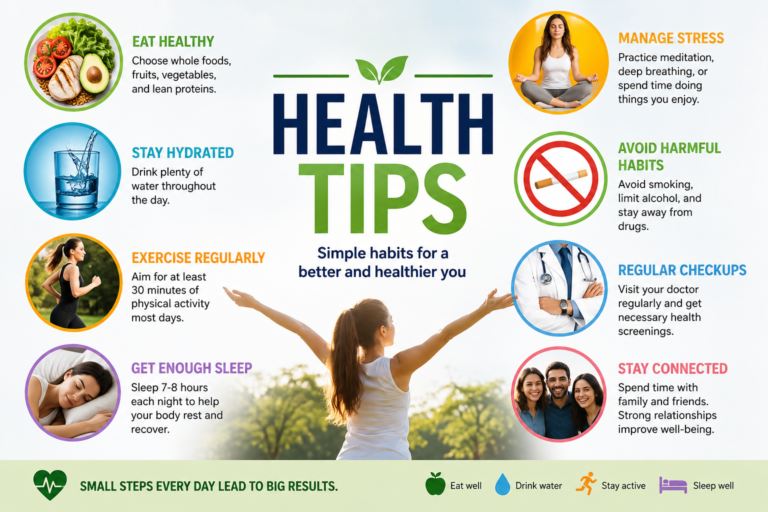
Health tips Good health is not something that depends on one perfect meal, one intense workout, or a strict diet. It is built through small decisions repeated consistently. The way you eat, sleep, move, manage stress, and care for your body can have a meaningful effect on how you feel each day. Fortunately, healthy living does not have to be complicated.
Many people associate wellness with expensive supplements, restrictive diets, or demanding fitness programs. In reality, some of the most useful health tips are surprisingly simple. Drinking enough water, eating nutritious foods, getting regular movement, sleeping well, and paying attention to warning signs can all support overall well-being.
The challenge is turning good advice into habits that fit real life. Work, family responsibilities, social commitments, and busy schedules can make healthy choices feel difficult. A practical approach is to focus on progress instead of perfection. Even small improvements can become powerful when they are maintained over time.
This guide explores practical health tips that can help you create a balanced lifestyle. These suggestions are intended for general wellness and are not a substitute for personalized medical advice from a qualified healthcare professional.
Why Healthy Habits Matter
Healthy habits influence much more than body weight. They can support energy levels, physical fitness, emotional well-being, concentration, and everyday functioning. When healthy behaviors become part of your routine, you do not have to make the same difficult decision every morning.
Nutrition, physical activity, sleep, hydration, and stress management are closely connected.Health Tips For example, poor sleep can make you feel tired and may make it harder to stay active. Being inactive can affect fitness and mood, while poor eating habits may leave you feeling sluggish. Improving one area can sometimes make other healthy choices easier.
Consistency is more important than trying to change everything overnight. A person who walks regularly, eats balanced meals, and maintains a reasonable sleep schedule may benefit more in the long run than someone who follows an extremely strict routine for a few weeks and then abandons it.
The most effective health tips are therefore the ones you can realistically maintain. Instead of asking whether a habit is perfect, ask whether it is practical enough to continue for months and years.
Eat a Balanced and Nutrient-Rich Diet
Food provides the energy and nutrients your body needs to function.Health Tips A balanced eating pattern generally includes a variety of vegetables, fruits, whole grains, protein-rich foods, and healthy sources of fat. Variety matters because different foods provide different vitamins, minerals, fiber, and other nutrients.
Try to make whole or minimally processed foods the foundation of most meals. Vegetables and fruits can add fiber and important micronutrients, while foods such as beans, lentils, eggs, fish, poultry, nuts, seeds, and dairy or fortified alternatives can provide useful protein and other nutrients.
Health Tips You do not necessarily need to eliminate your favorite foods. Healthy eating can include occasional desserts, restaurant meals, or snacks. The bigger picture matters more than one meal. A flexible approach is often easier to maintain than a diet based on strict rules.
Health Tips Portion awareness can also be helpful. Eating slowly and paying attention to hunger and fullness signals may help you recognize when you have had enough. Instead of constantly focusing on restriction, concentrate on adding nutritious foods to your meals.
Stay Hydrated Throughout the Day
Water plays an important role in normal body functions.Health Tips Your body uses water for temperature regulation, digestion, circulation, and other processes. The amount you need can vary depending on factors such as activity, climate, diet, and individual circumstances.
A simple way to improve hydration is to keep water accessible during the day.Health Tips Having a reusable bottle nearby can make drinking water more convenient, especially while working or traveling.
Thirst is one useful signal, but hydration needs are not identical for everyone. Hot weather and exercise can increase fluid requirements. People who sweat heavily may need to pay particular attention to replacing fluids.
Water is usually an excellent everyday beverage.Health Tips Sugary drinks can add substantial calories without providing the same nutritional value as whole foods. That does not mean you can never enjoy them, but making water your regular choice can be a practical wellness habit.
Make Physical Activity Part of Your Routine
Regular physical activity is one of the most valuable health habits you can develop.Health Tips Movement supports cardiovascular fitness, muscle strength, bone health, mobility, and overall physical function. It can also contribute to better mood and daily energy.
Exercise does not have to mean spending hours in a gym.Health Tips Walking, cycling, swimming, dancing, recreational sports, gardening, and active household tasks can all contribute to a more active lifestyle.
If you have been inactive, start gradually.Health Tips A short daily walk can be a better starting point than an intense workout that leaves you exhausted or injured. As your fitness improves, you can slowly increase the duration or intensity of your activities.
Strength training is also worth including when appropriate. Resistance exercises can help maintain muscle and physical strength. Combining aerobic activity with strength-focused movement provides a more well-rounded approach to fitness.
Prioritize Quality Sleep Health Tips
Sleep is often overlooked when people discuss health, yet it is an essential part of overall wellness. During sleep, the body and brain carry out important restorative processes.Health Tips Regularly getting insufficient or poor-quality sleep can affect how you feel and function during the day.
A consistent sleep schedule can help create a predictable routine.Health Tips Going to bed and waking up around similar times each day may make it easier to establish healthy sleep patterns.
Your evening environment matters too. A comfortable, quiet, and reasonably dark bedroom can support better sleep. Limiting stimulating activities close to bedtime may also help some people wind down.
If you regularly struggle with sleep despite making reasonable changes, it is worth discussing the problem with a healthcare professional.Health Tips Persistent sleep difficulties can sometimes be associated with underlying conditions that require appropriate evaluation.
Learn to Manage Everyday Stress Health Tips
Stress is a normal part of life, but constant or overwhelming stress can make it harder to maintain healthy routines. Learning practical ways to manage stress can therefore be an important part of wellness.
Different techniques work for different people.Health Tips Some individuals benefit from walking outdoors, exercising, reading, journaling, listening to music, practicing breathing exercises, or spending time with supportive friends and family.
It can also help to identify the sources of unnecessary stress.Health Tips a crowded schedule, unrealistic expectations, excessive screen time, or poor boundaries may contribute to feeling overwhelmed. Sometimes improving organization or saying no to unnecessary commitments can be as useful as adding another wellness activity.
Mental well-being deserves the same attention as physical health. If stress, anxiety, sadness, or emotional difficulties are persistent or interfering with daily life, consider speaking with a qualified mental health professional or healthcare provider.
Protect Your Health With Preventive Care
One of the most practical health tips is to avoid waiting until something feels seriously wrong before paying attention to your health. Preventive care can help identify certain problems earlier and provides an opportunity to discuss risk factors with a healthcare professional.
Routine medical appointments may be appropriate depending on your age, sex, family history, and individual risk factors. Recommended screenings and vaccinations also vary from person to person and by location.
Knowing your family health history can be useful. Certain conditions may occur more frequently within families, so sharing relevant information with your healthcare provider can help inform personalized care.
It is also important to pay attention to changes in your body. Unusual symptoms that persist, worsen, or concern you deserve appropriate medical attention. Avoid relying solely on online information to diagnose yourself.
Reduce Harmful Lifestyle Habits
Healthy living is not only about adding positive habits. It can also involve reducing behaviors that may negatively affect your health. Tobacco use, excessive alcohol consumption, prolonged inactivity, and consistently poor dietary patterns can all work against long-term wellness.
If you smoke or use tobacco products, quitting can be one of the most meaningful steps you can take for your health. Nicotine dependence can be difficult to overcome, so professional support may be useful rather than relying entirely on willpower.
Alcohol is another area where moderation and individual circumstances matter. Some people may need to avoid alcohol completely because of medications, medical conditions, pregnancy, recovery from alcohol dependence, or other reasons.
You do not need to transform your lifestyle in a single weekend. Reducing harmful behaviors gradually and seeking appropriate support can make change more realistic. The goal is to create sustainable improvements rather than chase a temporary health challenge.
Take Care of Your Mental and Social Well-Being
Health is not purely physical. Your relationships, emotional state, sense of purpose, and social connections can also influence your quality of life. Spending time with people who support and respect you can provide emotional benefits and help reduce feelings of isolation.
Make room for activities that genuinely make you feel refreshed. Hobbies, creative projects, outdoor activities, learning opportunities, and meaningful conversations can add balance to a demanding routine.
Digital habits deserve attention as well. Constant notifications and endless scrolling can consume time and make it difficult to relax. Creating periods without unnecessary screen use can give your mind a chance to slow down.
Most importantly, do not treat emotional well-being as something you should simply ignore. Asking for help is not a weakness. Speaking with a trusted person or professional can be an important part of taking care of yourself.
Build Healthier Habits That Actually Last
One reason people struggle with wellness goals is that they make their plans too complicated. A routine with ten major changes may look impressive on paper, but it can quickly become exhausting. Starting with one or two realistic habits is often more sustainable.
For example, you might begin by taking a short walk after dinner or adding a serving of vegetables to one daily meal. Once the habit feels normal, another small improvement can be introduced.
Tracking progress can also provide motivation. You might keep a simple record of your physical activity, sleep schedule, meals, or other personal goals. The purpose is not to become obsessed with numbers but to recognize patterns and improvements.
Expect setbacks. Missing a workout or eating an unhealthy meal does not erase your previous progress. A healthy lifestyle is measured over weeks, months, and years, not by a single day. Returning to your routine after a setback is often more important than trying to avoid every mistake.
Simple Health Tips for a Busy Lifestyle
Busy schedules can make healthy living challenging, but you do not need unlimited free time to take care of yourself. Small choices throughout the day can add up. Taking the stairs when practical, walking during a break, preparing simple meals, and keeping nutritious snacks available are realistic strategies.
Meal preparation can also reduce reliance on convenience foods. Preparing basic ingredients in advance can make it easier to put together balanced meals when you are tired or busy.
Try to protect your sleep schedule even when work becomes demanding. Staying up late every night to complete tasks may feel productive temporarily, but consistently sacrificing sleep can make the following day more difficult.
Finally, avoid comparing your routine with someone else’s. A health plan should fit your body, schedule, responsibilities, preferences, and circumstances. What works beautifully for one person may be unrealistic for another.
Common Health Mistakes to Avoid
One common mistake is believing that healthy living requires perfection. This mindset can turn a single unhealthy choice into an excuse to abandon the entire routine. Instead, think in terms of patterns. One less nutritious meal does not define your overall diet.
Another mistake is following health advice without considering individual needs. Nutrition, exercise, medications, allergies, medical conditions, age, and other factors can affect what is appropriate. General wellness advice should not replace personalized professional guidance.
People also sometimes focus too heavily on weight while ignoring other measures of health. Fitness, strength, sleep quality, energy, mobility, mental well-being, and preventive care are all important parts of a healthy life.
Finally, be cautious about dramatic health claims. Products or programs promising instant results deserve skepticism. Sustainable health usually comes from consistent habits rather than shortcuts.
How to Create a Practical Daily Wellness Routine
A healthy daily routine does not need to be complicated. Start your day with hydration and a nutritious breakfast if breakfast fits your eating pattern. Include some movement during the day and aim to build meals around a variety of nutritious foods.
During work or study, take regular opportunities to stand, stretch, or walk. Long periods of uninterrupted sitting can make a day feel physically stagnant, so brief movement breaks can be useful.
In the evening, create some space for relaxation. You might take a walk, read, talk with family, prepare for the next day, or practice another calming activity. A predictable evening routine can make it easier to transition toward sleep.
Over time, these small actions become part of normal life rather than another demanding project. That is the real goal of good health habits: creating a lifestyle that supports you without making every day feel like a health challenge.
Final Thoughts on Health Tips
The best health tips are often the simplest ones: eat a varied and nutritious diet, stay hydrated, move regularly, sleep well, manage stress, maintain meaningful relationships, avoid harmful habits, and keep up with appropriate preventive care.
You do not have to become a completely different person to improve your health. Start with one realistic change and give yourself time to adjust. Once that behavior becomes comfortable, build on it gradually.
Remember that health is personal. Your ideal routine may look different from someone else’s, and professional guidance may be important when you have specific medical needs. When in doubt, consult a qualified healthcare professional who can consider your individual circumstances.
A healthier life is rarely created through one dramatic decision. It is built quietly through ordinary choices repeated consistently. Small steps may seem insignificant today, but over time they can create a meaningful foundation for better well-being.
FAQs
What are 10 tips for good health?
Eat a balanced diet, exercise regularly, drink enough water, sleep well, manage stress, maintain a healthy weight, avoid smoking, limit alcohol, stay socially connected, and get regular checkups.
What are the 5 health tips?
Eat nutritious foods, stay active, drink plenty of water, get enough sleep, and manage stress effectively.
What are 20 ways to stay healthy?
Eat well, exercise, hydrate, sleep enough, manage stress, maintain good hygiene, avoid smoking, limit alcohol, maintain a healthy weight, get checkups, stay socially connected, protect your skin, practice food safety, take breaks, stay mentally active, limit excessive screen time, maintain good posture, follow vaccinations, spend time outdoors, and listen to your body.
How to get healthy in 7 days?
Start with balanced meals, daily movement, adequate water, consistent sleep, and reduced junk food. Focus on building healthy habits rather than expecting dramatic results in just one week.
YOU MAY ASLO READ

wellcome to glamnetworth i am rimsha razzaq and AI-Powered SEO , and containt writer with four years of experince i help website rank higher, grow traffic, and look amazing . my goal is to make SEO and web design simple and effective for everyone . Lets achieve more together|