Mount Fuji Facts 10 Fascinating Facts, Height, Location, History, and Major Eruptions
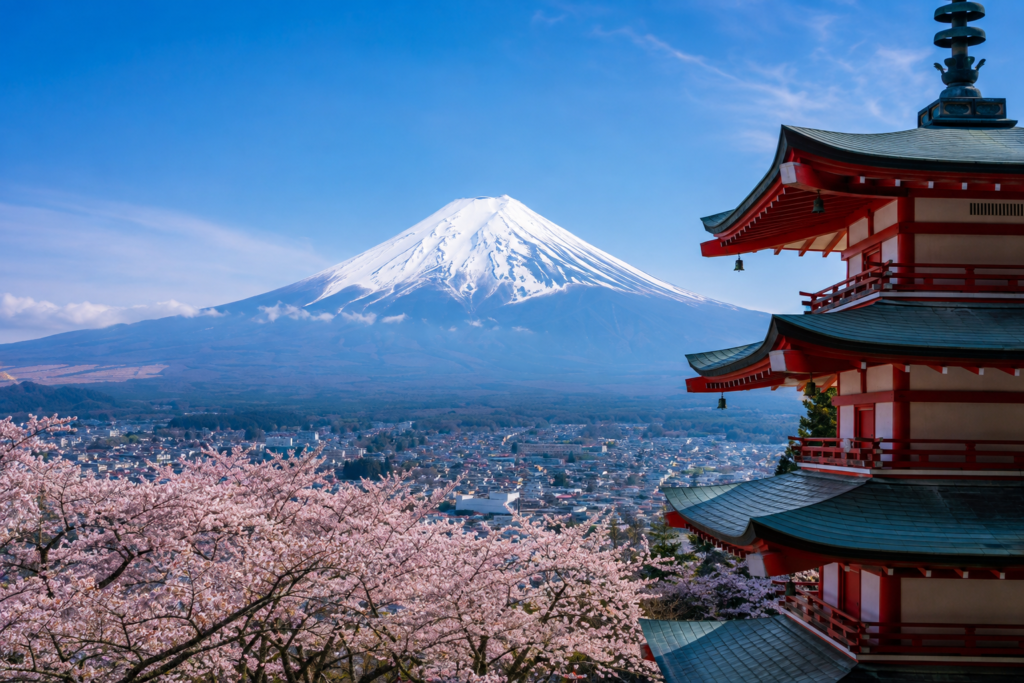
mount fuji facts
mount fuji facts is one of the most recognizable mountains on Earth. Its nearly symmetrical cone, often covered with snow, has become a powerful symbol of Japan and a favorite subject for photographers, travelers, artists, and writers. Rising dramatically above the surrounding landscape, the mountain has an appearance that feels almost unreal, especially on clear mornings when its summit can be seen from far away.
But Mount Fuji is much more than a beautiful mountain. It is an active stratovolcano with a long and complicated geological history. The mountain has been shaped by repeated volcanic eruptions, lava flows, earthquakes, erosion, and enormous changes in the surrounding landscape. Its most recent major eruption occurred in 1707, and scientists continue to monitor the volcano today.
At 3,776 meters (12,388 feet), Mount Fuji is the highest mountain in Japan. It stands across Yamanashi and Shizuoka prefectures on Honshu, Japan’s largest island, roughly 100 kilometers southwest of Tokyo. Its location makes it surprisingly accessible while still giving it an imposing presence over the surrounding countryside.
This guide explores Mount Fuji’s height, location, geological history, famous eruptions, cultural importance, interesting facts, and why this remarkable volcano continues to attract attention around the world.
Where Is Mount Fuji Located?
Mount Fuji is located on Honshu, the largest and most populated island of Japan. The mountain sits between Yamanashi Prefecture to the north and Shizuoka Prefecture to the south. Its position places it within relatively easy reach of Tokyo, which is one reason the mountain has become such an important destination for domestic and international visitors. UNESCO describes Fujisan as being about 100 kilometers southwest of Tokyo.
The mountain dominates a large area of central Japan. Its southern slopes extend toward Suruga Bay, while the northern side is surrounded by the famous Fuji Five Lakes region. These lakes create some of the best-known viewpoints of the mountain because they combine calm water, surrounding forests, and the dramatic Fuji cone in a single landscape.
Mount Fuji is also closely associated with several important towns and tourist areas. Fujiyoshida in Yamanashi is particularly famous for views of the mountain, while areas around Lake Kawaguchi have become popular for photography, sightseeing, accommodation, and outdoor activities. Shizuoka also offers numerous perspectives from the southern and western sides.
Its location is especially interesting from a geological perspective. Mount Fuji developed in an area influenced by the interaction of major tectonic plates, including the Philippine Sea Plate and the North American and Eurasian plates. This complex tectonic environment helps explain why volcanic and earthquake activity are important parts of Japan’s natural landscape.
How High Is Mount Fuji?
Mount Fuji has an official elevation of 3,776 meters, or approximately 12,388 feet, above sea level. That makes it the highest mountain in Japan. The highest point is known as Kengamine, located around the summit area. Japan’s Meteorological Agency lists the mountain’s elevation as 3,776 meters.
Its height is only one part of what makes Fuji impressive. The mountain rises dramatically from the surrounding landscape, creating the illusion that it is even taller than its official measurement suggests. Unlike a mountain range with numerous competing peaks, Fuji stands relatively alone, giving its cone a particularly powerful visual presence.
The upper slopes become considerably steeper than the lower portions. According to information published by the Tokyo Metropolitan Government, slopes below approximately 1,000 meters are relatively gentle, while the gradient becomes much steeper at higher elevations and approaches 40 degrees near the summit.
The summit itself is a volcanic crater rather than an ordinary mountain peak. NASA describes the summit crater as roughly 500 meters across and about 250 meters deep. This enormous volcanic structure is a reminder that the beautiful cone people see in photographs is actually the surface expression of a powerful geological system.
What Type of Volcano Is Mount Fuji?
Mount Fuji is classified as a stratovolcano, sometimes called a composite volcano. Stratovolcanoes are generally built through repeated eruptions that deposit layers of lava, ash, cinders, and other volcanic materials around an eruptive center. Over long periods, these layers can create steep, cone-shaped mountains.
Fuji’s recognizable shape is strongly connected to this geological process. NASA notes that its steep conical profile developed from numerous layers of lava and volcanic debris produced by both explosive and effusive eruptions. The result is the elegant shape that has made Mount Fuji one of the world’s most recognizable volcanoes.
However, today’s Mount Fuji is not simply one volcanic cone that formed all at once. It developed through several stages and overlapping volcanic systems. The Japanese Meteorological Agency explains that the present stratovolcano formed over older volcanic bodies, including Komitake and Old Fuji.
The newer volcanic structure, commonly referred to as New Fuji, became active thousands of years ago. The Tokyo Metropolitan Government describes Mount Fuji as consisting broadly of an older volcanic system and the younger Fuji volcano that remains active today. This long development explains why the mountain’s geological history is far more complicated than its smooth exterior might suggest.
The Geological History of Mount Fuji
The geological story of Mount Fuji stretches back thousands of years. Before the present mountain developed, volcanic activity created older structures in the region. Over time, eruptions built new layers, while collapses and erosion changed the shape of the volcanic landscape.
The Japanese Meteorological Agency reports that major lava-producing activity occurred roughly between 17,000 and 8,000 years ago. Later activity helped build the main volcanic body, while additional explosive eruptions and collapses continued to reshape the mountain.
One particularly important stage occurred when older parts of the volcanic structure experienced major collapse. Such events can remove enormous portions of a volcano and leave behind a very different landscape. Subsequent eruptions then rebuild the mountain, creating the layered geological structure that characterizes Mount Fuji today.
The mountain has also produced a large number of smaller volcanic features. Japan’s Meteorological Agency notes that approximately 100 parasitic or flank volcanoes exist around Mount Fuji. These smaller volcanic features demonstrate that eruptions have not always been confined to the summit.
Major Mount Fuji Eruptions Throughout History
Mount Fuji has erupted many times throughout its history. Some of the earliest documented eruptions occurred more than a thousand years ago, and historical records provide valuable evidence of the volcano’s changing activity. The Japanese Meteorological Agency records eruptions beginning in the eighth century, including events in 781, 800–802, and 864–866.
The eruption of 864–866, often associated with the Jōgan period, was especially significant. Large quantities of volcanic material and lava were released from the northwestern flank. The lava traveled across the surrounding landscape and dramatically altered the region. Historical and geological evidence links this eruption to changes involving the area now occupied by several of the Fuji Five Lakes.
The eruption history shows that Mount Fuji has not always behaved in the same way. Some eruptions produced ash and scoria, while others generated substantial lava flows. This variety is typical of a volcano whose activity has developed over a long geological period.
Although the mountain has been quiet in terms of major eruptions for centuries, it remains classified as an active volcano. That does not mean an eruption is constantly expected. Instead, it means the geological system retains the potential for future volcanic activity, which is why monitoring remains important.
The 1707 Mount Fuji Eruption
The most recent major eruption of Mount Fuji occurred in 1707 and is known as the Hōei eruption. It began on the southeastern flank of the mountain rather than directly from the summit crater. This eruption is particularly important because it is the latest confirmed major eruption in Fuji’s historical record.
The Hōei eruption produced enormous amounts of ash and other volcanic material. Strong winds carried the ash toward the northeast, including areas around Edo, the city that later became Tokyo. NASA reports that ash from the eruption reached Edo, approximately 95 kilometers away.
The consequences extended beyond the immediate volcanic area. Japanese government disaster information explains that ash and volcanic material affected agricultural land in parts of present-day Shizuoka, Kanagawa, and Tokyo. Secondary problems, including river flooding associated with volcanic deposits, also contributed to the long-term impact.
The Hōei eruption also left a highly visible geological feature called the Hōei crater on the southeastern slope. Today, this crater serves as a physical reminder that Mount Fuji’s peaceful appearance does not mean the volcano has lost its geological activity. The mountain has been quiet since 1707, but it continues to be monitored carefully.
Why Is Mount Fuji Important to Japanese Culture?
Mount Fuji has deep cultural and spiritual significance in Japan. For centuries, people have regarded the mountain with a mixture of admiration, respect, and religious devotion. Its enormous size and unusual symmetry naturally encouraged people to view it as something more than an ordinary landscape feature.
UNESCO explains that Fujisan became an important center of ascetic Buddhist training in the 12th century, incorporating elements of Shinto tradition. Pilgrims traveled toward and up the mountain as part of spiritual practices, while shrines and religious sites developed around its base and summit.
The cultural relationship with Fuji also appears in Japanese art and literature. Representations of the mountain can be traced back many centuries, while famous nineteenth-century woodblock prints helped introduce its distinctive shape to audiences outside Japan. These artworks played an important role in making Fuji an international visual symbol.
Perhaps the most fascinating part is that the mountain’s cultural meaning has continued into modern times. People still climb Fuji for personal, spiritual, recreational, and cultural reasons. UNESCO’s designation recognizes not just the mountain itself but a broader cultural landscape containing shrines, pilgrimage routes, lodging sites, lakes, waterfalls, and other features associated with Fujisan.
Mount Fuji as a UNESCO World Heritage Site
Mount Fuji was added to the UNESCO World Heritage List in 2013 under the title “Fujisan, sacred place and source of artistic inspiration.” This recognition emphasizes that the mountain’s importance goes beyond geology or scenic beauty. It represents a combination of natural landscape, religious tradition, history, and artistic influence.
The UNESCO property includes 25 sites associated with the mountain. These include pilgrimage routes, shrines, lodging houses, natural volcanic features, lakes, springs, and waterfalls. Together, they demonstrate how deeply Fuji has influenced the people and communities around it.
One remarkable detail is that the cultural heritage designation includes areas connected to the mountain’s upper slopes. UNESCO notes that the upper 1,500-meter tier of the 3,776-meter mountain contains pilgrimage routes and crater shrines, while other important cultural and natural sites are located around the base.
The UNESCO recognition also reflects Fuji’s influence on art. Its distinctive cone became an enduring subject for Japanese artists, especially during the nineteenth century. Images of Fuji eventually traveled beyond Japan and influenced artists in other parts of the world, helping transform the mountain into a truly global cultural icon.
Interesting Facts About Mount Fuji
One of the easiest facts to remember about Mount Fuji is its height: 3,776 meters. It is the tallest mountain in Japan and one of the country’s most recognizable natural landmarks. Its isolated position and symmetrical shape make it particularly easy to identify compared with many other mountains.
Another interesting fact is that Mount Fuji is still considered an active volcano even though its last major eruption occurred in 1707. Japan’s Meteorological Agency maintains continuous observation using instruments such as seismometers, tiltmeters, acoustic sensors, GNSS equipment, and monitoring cameras.
Mount Fuji also has an enormous physical footprint. The Japanese Meteorological Agency describes the broader volcanic system as having a base approximately 50 kilometers in diameter. Its slopes, lava formations, lakes, forests, and smaller volcanic features form a large and varied landscape around the central cone.
A final fascinating fact is that Fuji’s appearance can change dramatically with weather and season. Snow may cover the upper slopes, clouds can hide the summit completely, and atmospheric conditions can make the mountain appear unusually sharp or distant. That changing appearance is part of what has made Fuji such a powerful subject for photography and art.
Why Mount Fuji Still Matters Today
Mount Fuji remains important for several different reasons. For travelers, it is one of Japan’s most famous destinations. For scientists, it is an active stratovolcano with a complex geological history. For artists, it remains an extraordinary subject. And for Japanese culture, it continues to represent a powerful connection between people, nature, spirituality, and history.
Modern technology has also changed how scientists understand and monitor the mountain. Continuous measurements can detect earthquakes, ground deformation, and other signals that may provide information about volcanic activity. The Japanese Meteorological Agency maintains a dedicated monitoring system because understanding changes in an active volcano is essential for public safety.
The mountain’s historical eruptions also provide an important lesson. A volcano can remain quiet for centuries while still retaining the ability to erupt. Mount Fuji’s 1707 eruption demonstrates that volcanic hazards can affect communities far beyond the immediate slopes. Ashfall can travel significant distances and create agricultural, transportation, environmental, and infrastructure problems.
At the same time, Mount Fuji represents the positive side of living alongside a powerful natural feature. Its landscapes support tourism, photography, outdoor recreation, cultural traditions, and local economies. The mountain’s story is therefore not simply about danger. It is also about beauty, resilience, history, science, and the remarkable relationship humans can develop with the natural world.
Frequently Asked Questions About Mount Fuji
What is Mount Fuji famous for?
Mount Fuji is famous for being Japan’s highest mountain, its nearly symmetrical volcanic cone, and its enormous cultural significance. It has inspired Japanese artists and writers for centuries and became a UNESCO World Heritage cultural site in 2013.
How tall is Mount Fuji?
Mount Fuji is 3,776 meters (12,388 feet) tall. It is the highest mountain in Japan and one of the world’s best-known stratovolcanoes.
Where is Mount Fuji located?
Mount Fuji is located on Honshu, Japan, between Yamanashi and Shizuoka prefectures. It is approximately 100 kilometers southwest of Tokyo, making it relatively accessible from the capital.
When did Mount Fuji last erupt?
Mount Fuji’s most recent major eruption occurred in 1707. Known as the Hōei eruption, it began on the southeastern flank and produced substantial ash and volcanic material.
Is Mount Fuji an active volcano?
Yes. Mount Fuji is classified as an active volcano and is continuously monitored by Japanese authorities. Its long period of quiet does not change its geological classification.
Why is Mount Fuji important to Japan?
Mount Fuji is important because it combines natural beauty, volcanic history, religious significance, artistic influence, and national symbolism. For centuries, it has been associated with pilgrimage and spiritual traditions, while its distinctive shape has become one of the most recognizable symbols of Japan.
Final Thoughts on Mount Fuji
Mount Fuji is one of those rare places where geology, history, culture, and beauty come together in a single landmark. At 3,776 meters, it is Japan’s highest mountain, but its importance cannot be measured by height alone. The volcano has shaped the surrounding landscape through thousands of years of eruptions and lava flows while also shaping Japanese art, religion, and identity.
Its location near Tokyo makes Fuji remarkably visible and accessible, yet the mountain can still feel distant and mysterious when its summit rises above clouds or disappears behind changing weather. The same slopes that appear peaceful in photographs were created through powerful volcanic processes, and the Hōei eruption of 1707 remains a vivid reminder of the mountain’s active nature.
Today, Mount Fuji continues to be carefully monitored while welcoming travelers, climbers, photographers, artists, and researchers. Its UNESCO World Heritage status further recognizes the extraordinary relationship between the mountain and Japanese culture.
Ultimately, Mount Fuji is much more than a famous Japanese landmark. It is a living geological monument, a spiritual symbol, an artistic inspiration, and a remarkable example of how nature can influence human civilization for generations. Its eruptions built the mountain, its shape inspired generations of artists, and its presence continues to define one of the most recognizable landscapes in the world.
YOU MAY ALSO READ

wellcome to glamnetworth i am rimsha razzaq and AI-Powered SEO , and containt writer with four years of experince i help website rank higher, grow traffic, and look amazing . my goal is to make SEO and web design simple and effective for everyone . Lets achieve more together|