
Poetry is one of the oldest and most expressive forms of writing. It allows people to communicate emotions, ideas, and experiences in a way that ordinary writing often cannot. Whether you’re writing about love, nature, loss, happiness, or personal growth, a poem gives you the freedom to express yourself creatively.
Many beginners believe poetry follows strict rules, but that’s only partially true. While some poems use traditional structures like sonnets or haikus, many modern poems have no fixed format at all. The beauty of poetry lies in its flexibility and emotional depth.
If you’ve ever wondered how to write a poem, this guide will walk you through every important step. From finding inspiration to polishing your final draft, you’ll learn practical techniques that make poetry easier and more enjoyable.
Understand What Makes a Poem Different
A poem is much more than a collection of beautiful words. It captures feelings, paints vivid images, and often says more with fewer words than an entire page of prose. Unlike essays or stories, poems focus heavily on rhythm, emotion, and imagination.
One of the defining features of poetry is its ability to create powerful mental images. Instead of simply telling readers what happened, poetry helps them see, hear, and feel the experience. Good poets often rely on sensory language to make every line memorable.
Another important characteristic is that poetry encourages interpretation. Different readers may discover different meanings in the same poem, making poetry a deeply personal experience for both the writer and the audience.
Find Inspiration Before You Start Writing
Every great poem begins with inspiration. Fortunately, inspiration can come from almost anywhere. Nature, conversations, memories, books, music, dreams, and everyday experiences all provide excellent material for poetry.
Don’t wait for the “perfect idea” before you begin. Sometimes the best poems start with a simple observation, such as watching rain fall, hearing birds sing, or remembering a childhood moment. Small experiences often lead to the most meaningful poems.
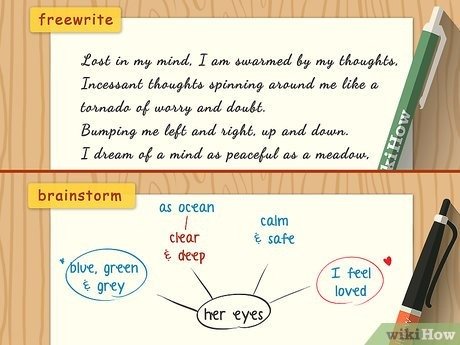
Keeping a notebook or digital journal is a smart habit for aspiring poets. Write down interesting thoughts, unusual phrases, emotions, or observations throughout your day. These notes can later become the foundation of an original poem.
Choose a Theme or Central Message
Before writing your first line, decide what your poem is about. Every strong poem has a central theme that guides the writing process. Your theme could be love, hope, fear, friendship, family, success, loneliness, or anything that matters to you.
Having a clear focus helps your poem stay organized. Instead of jumping between unrelated ideas, each line should contribute to the overall message. Readers appreciate poems that feel connected from beginning to end.
Remember that your theme doesn’t need to be complicated. Even simple topics become powerful when expressed honestly. Authentic emotions often have a stronger impact than overly complex ideas.
Select the Type of Poem You Want to Write
There are many different forms of poetry, and choosing one can make writing much easier. Beginners often enjoy free verse because it doesn’t require a specific rhyme scheme or syllable count.
If you enjoy structure, you might try writing a haiku, which traditionally contains three lines with a 5-7-5 syllable pattern. Limericks are another fun option, using a playful rhythm and rhyme scheme that makes them enjoyable to read.
Rhyming poems remain popular as well, although modern poetry frequently avoids rhyme altogether. The most important decision is choosing a style that matches your subject and writing preferences.
Use Strong Imagery and Descriptive Language
Imagery is one of the most powerful tools in poetry. Instead of telling readers that something was beautiful, describe what they would actually see, hear, smell, taste, or touch. This makes your poem feel alive.
For example, instead of writing, “The garden looked nice,” you might say, “Golden sunflowers stretched toward the morning sky while butterflies danced above blooming roses.” Specific descriptions create stronger emotional connections.
Metaphors, similes, and personification also enrich poetry. Comparing emotions to storms, giving the wind a voice, or describing hope as a rising sunrise helps readers visualize abstract ideas more clearly.
Focus on Rhythm and Word Choice
Every word matters in poetry. Unlike long-form writing, poems often communicate powerful messages using very few words. Choosing precise vocabulary makes every line stronger.
Read your poem aloud while writing. This helps you notice awkward phrasing, repetitive words, or lines that interrupt the natural flow. Good poetry sounds smooth when spoken, even if it doesn’t rhyme.
Don’t be afraid to replace ordinary words with more vivid alternatives. Instead of “walked,” consider “wandered,” “strolled,” or “marched.” Small vocabulary improvements can significantly enhance your poem’s overall quality.
Don’t Worry About Rhyming
Many beginners mistakenly believe every poem must rhyme. In reality, countless successful poems use no rhyme at all. Free verse has become one of the most popular styles because it prioritizes natural expression over strict rules.
If rhyme feels forced, leave it out. Forced rhymes often weaken the meaning of a poem by encouraging awkward word choices. Focus first on expressing your ideas honestly and clearly.
If you enjoy rhyming, use it naturally. A gentle rhyme pattern can create musical flow without overwhelming the message. The poem should always prioritize meaning over matching sounds.
Edit and Improve Your Poem
Your first draft is rarely your best draft. Nearly every experienced poet spends time revising before considering a poem complete. Editing helps remove unnecessary words and strengthen weaker lines.
Look for repeated ideas, confusing phrases, and overly complicated language. Ask yourself whether every line contributes to the overall theme. If a sentence doesn’t improve the poem, consider removing it.
Reading your poem aloud several times is one of the best editing techniques. You’ll quickly notice where rhythm breaks, words repeat too often, or emotions fail to connect with readers.
Read More Poetry to Become a Better Poet
One of the fastest ways to improve your writing is by reading poems from different authors. Exposure to various styles teaches you new techniques, vocabulary, and creative approaches.
Don’t limit yourself to one type of poetry. Explore classic literature, modern free verse, spoken word poetry, and contemporary collections. Every poet offers something unique that can influence your own writing.
As you read, pay attention to imagery, line breaks, rhythm, and emotional impact. Instead of copying another poet’s style, learn why their poems are effective and apply those lessons to your own work.
Practice Writing Regularly
Poetry improves with consistent practice. You don’t need to write a masterpiece every day. Even writing a few lines daily helps develop creativity and confidence.
Challenge yourself with different writing prompts. Describe a season, write about a favorite memory, imagine a conversation with the moon, or capture the feeling of watching a sunset. These exercises strengthen your poetic thinking.
Don’t judge your early work too harshly. Every successful poet started as a beginner. Improvement comes from writing frequently, experimenting with new ideas, and learning from each poem you create.
Common Mistakes Beginners Should Avoid
Many new poets try too hard to sound sophisticated. Using overly complicated words doesn’t automatically make a poem better. Clear, honest language often creates a stronger emotional connection.
Another common mistake is trying to imitate famous poets too closely. Inspiration is valuable, but originality is even more important. Your unique voice is what makes your poetry memorable.
Finally, avoid rushing the writing process. Great poems often require time, reflection, and multiple revisions. Be patient with yourself and allow your creativity to develop naturally.
Final Thoughts
Learning how to write a poem is a rewarding journey that combines creativity, observation, and emotional expression. There is no single formula for writing the perfect poem because every poet brings a unique perspective and voice to the page. The more you write, the more confident and skilled you’ll become.
Start with simple ideas, focus on honest emotions, and don’t be afraid to experiment with different styles. Use vivid imagery, choose meaningful words, and revise your work until it communicates exactly what you want readers to feel. Every poem you write is an opportunity to improve your craft.
Most importantly, remember that poetry is about connection. Whether you’re writing for yourself, friends, or a wider audience, your words have the power to inspire, comfort, and spark imagination. Keep practicing, stay curious, and enjoy the creative process. Every great poet began with a single line, and yours could be the start of something extraordinary.

wellcome to glamnetworth i am rimsha razzaq and AI-Powered SEO , and containt writer with four years of experince i help website rank higher, grow traffic, and look amazing . my goal is to make SEO and web design simple and effective for everyone . Lets achieve more together|
