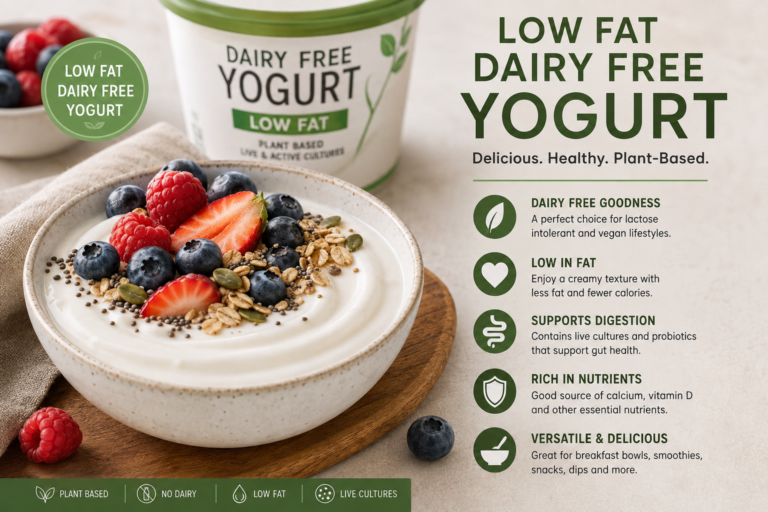
Low Fat Dairy Free Yogurt Finding a yogurt that fits your dietary needs can be surprisingly difficult. Traditional yogurt is made from cow’s milk, which means it is not suitable for people avoiding dairy. At the same time, many dairy-free yogurts contain added sugar, extra fat, or a long list of ingredients. That is where low fat dairy free yogurt can become an interesting option.
A good dairy-free yogurt can provide a creamy texture without using traditional milk. Depending on the ingredients, it may also provide protein, calcium, vitamin D, probiotics, and other useful nutrients. However, not every product on the shelf offers the same nutritional value.
Understanding the ingredients and nutrition facts makes shopping much easier. Some products are designed mainly for taste, while others are formulated to provide a more balanced nutritional profile. Learning what to look for can help you choose a yogurt that works well with your everyday eating habits.
This guide explains what low fat dairy free yogurt is, how it is made, its potential benefits, common ingredients, nutrition considerations, and ways to use it. Whether you avoid dairy completely or simply want more plant-based choices, this article will help you make a more informed decision.
What Is Low Fat Dairy Free Yogurt?
Low fat dairy free yogurt is a yogurt-style food made without traditional dairy milk and formulated with relatively little fat. Instead of cow’s milk, manufacturers usually use plant-based ingredients such as almond milk, oat milk, soy milk, coconut water, cashews, peas, or other plant sources.
The word “dairy free” is important because it means the product does not contain conventional milk ingredients. This makes dairy-free yogurt useful for people following vegan diets, avoiding lactose, or simply reducing their consumption of animal-based foods. However, shoppers should still read the package carefully because formulations can vary considerably.
The term “low fat” also deserves attention. A dairy-free product can be dairy free without being low in fat. For example, coconut-based yogurt can have a rich, creamy texture while containing considerably more fat than some almond- or oat-based alternatives. Therefore, checking the nutrition label is more reliable than judging a product by its flavor or texture.
The best choice ultimately depends on your nutritional goals. Someone looking for a high-protein breakfast may prefer soy-based yogurt, while another person may prioritize a short ingredient list or lower sugar. There is no single dairy-free yogurt that is perfect for everyone.
How Is Dairy Free Yogurt Made?
The production process begins with a plant-based liquid or puree rather than cow’s milk. Almonds, soybeans, oats, peas, or other ingredients may be processed to create the base. Manufacturers then adjust the mixture to achieve a texture and nutritional profile similar to traditional yogurt.
Many yogurt-style products are fermented using live cultures. These microorganisms help create the familiar tangy flavor associated with yogurt. Fermentation can also change the texture of the base and give the finished product a thicker consistency.
Some plant-based yogurts require additional ingredients to create a creamy texture. Starches, pectin, gums, or other thickeners may be used depending on the formulation. These ingredients are not automatically bad, but consumers who prefer minimally processed foods may want to compare labels.
After fermentation and processing, the yogurt is usually flavored or sweetened when necessary. Plain varieties generally have fewer added ingredients than fruit-flavored versions. If you want greater control over sweetness, plain dairy-free yogurt can be paired with fresh fruit, cinnamon, nuts, or seeds at home.
Popular Bases Used in Low Fat Dairy Free Yogurt
Soy is one of the most useful bases for dairy-free Low Fat Dairy Free Yogurt because soy naturally contains protein. Soy-based yogurt can therefore be a practical choice for people who want a plant-based breakfast with a more substantial protein contribution.
Almond-based yogurt is another popular option. Almond products can have a mild flavor and smooth consistency, although their protein content may be lower than soy-based alternatives. Some almond yogurts are fortified with calcium and vitamin D to improve their nutritional profile.
Oat-based yogurt has become increasingly popular because oats can create a naturally creamy mouthfeel. The flavor is generally mild, making oat Low Fat Dairy Free Yogurt easy to combine with fruit, granola, smoothies, or breakfast bowls. However, the nutritional content differs significantly among brands.
Coconut-based yogurt is known for its rich texture, but it is not always the best choice when the goal is specifically low fat. Coconut ingredients naturally contain fat, so a coconut-based product may be considerably richer than other plant-based alternatives. Always check the nutrition panel rather than assuming that every dairy-free yogurt is low fat.
Potential Benefits of Low Fat Dairy Free Yogurt
One major advantage of low fat dairy free yogurt is that it can provide an alternative to traditional yogurt for people who avoid dairy. This makes it easier to enjoy familiar foods such as Low Fat Dairy Free Yogurt bowls, smoothies, breakfast parfaits, and creamy sauces without relying on cow’s milk.
Some products are fortified with important nutrients. Calcium and vitamin D are particularly worth checking because traditional dairy products are common sources of these nutrients. A fortified plant-based yogurt can help contribute to daily intake, although the exact amount depends on the individual product.
Certain dairy-free yogurts also contain live cultures. These cultures are commonly associated with fermented foods and may contribute to digestive health as part of an overall balanced diet. However, the presence and type of cultures vary between products, so consumers should check the label.
Choosing a lower-fat option may also be useful for people who are trying to manage their overall dietary fat intake. Still, fat is not inherently unhealthy, and the quality of the entire food matters. A nutritious Low Fat Dairy Free Yogurt should be evaluated based on protein, added sugar, fiber, micronutrients, ingredients, and overall serving size rather than fat alone.
Is Low Fat Dairy Free Yogurt Healthy?
The short answer is that it can be. The nutritional quality of low fat dairy free yogurt depends heavily on the ingredients and formulation. Two products sitting next to each other in a supermarket refrigerator can have very different amounts of protein, sugar, calcium, and other nutrients.
Plain varieties are often easier to fit into a balanced diet because they generally avoid the large amounts of added sugar found in some flavored products. You can create your own flavor by adding berries, sliced banana, chopped apples, cinnamon, or a small amount of natural sweetener.
Protein is another important consideration. Some dairy-free Low Fat Dairy Free Yogurt contain only a small amount of protein per serving. If protein is a priority, look for products made from soy or other protein-rich ingredients, or choose a fortified product specifically designed to provide more protein.
It is also useful to consider what the yogurt is replacing. If you are replacing a sugary dessert with plain plant-based yogurt and fruit, the change may improve the overall quality of your snack. If you are replacing a nutrient-rich food with a heavily sweetened dairy-free product, the nutritional advantage may be much smaller.
What to Look for on the Nutrition Label
The nutrition label is your best tool when choosing low fat dairy free yogurt. Start by checking the serving size because nutritional numbers only make sense when you know how much food they represent. A container may contain more than one serving even if it looks like a single portion.
Next, look at total fat and saturated fat if reducing dietary fat is part of your goal. Then check protein, calcium, vitamin D, and fiber. These nutrients can help you understand whether the yogurt provides meaningful nutritional value beyond its creamy texture.
Added sugar deserves special attention. Fruit-flavored and dessert-style yogurts can contain substantial amounts of added sugar. A plain variety gives you more control because you can add sweetness yourself using fruit or another ingredient.
Finally, scan the ingredient list. A longer ingredient list does not automatically mean a product is unhealthy, but understanding the ingredients can help you identify the primary plant base, sweeteners, oils, thickeners, starches, and added nutrients used in the product.
Best Ways to Eat Low Fat Dairy Free Yogurt
A simple yogurt bowl is one of the easiest ways to enjoy a dairy-free option. Start with plain yogurt and add fresh berries, banana slices, chia seeds, walnuts, or a small amount of granola. This creates a satisfying breakfast without requiring complicated preparation.
Dairy-free yogurt can also work beautifully in smoothies. Blend it with frozen berries, banana, oats, and a plant-based beverage for a thick and creamy drink. Using plain yogurt allows you to control the sweetness and flavor of the final smoothie.
Another option is a breakfast parfait. Layer dairy-free yogurt with fruit and crunchy toppings in a glass or jar. This looks attractive enough for a weekend breakfast but is simple enough for busy mornings.
You can also use unsweetened yogurt in savory recipes. It can become a base for creamy dressings, dips, sauces, and marinades. Adding herbs, lemon juice, garlic, or spices can transform plain yogurt into a versatile ingredient for lunch or dinner.
Low Fat Dairy Free Yogurt for Weight Management
People sometimes choose low-fat foods because they believe lower fat automatically means lower calories. While reducing fat can lower calorie density in some products, this is not always the case. Added sugar and other ingredients can also affect the calorie content.
For someone managing weight, portion size and overall dietary pattern usually matter more than a single food. A plain dairy-free yogurt paired with fruit and protein-rich toppings may be more satisfying than a sweetened yogurt eaten alone.
Protein and fiber can be particularly helpful when building filling meals. If your chosen yogurt is low in protein, adding nuts, seeds, oats, or another protein-rich food can create a more balanced snack.
It is also worth remembering that sustainable eating habits are generally easier to maintain when foods are enjoyable. If a dairy-free yogurt tastes good and fits your nutritional needs, it can become a convenient part of a balanced routine rather than a temporary diet food.
Low Fat Dairy Free Yogurt vs. Traditional Yogurt
Traditional yogurt and dairy-free yogurt have different nutritional characteristics. Traditional yogurt is naturally rich in nutrients such as protein and calcium, while plant-based alternatives depend more heavily on the ingredients used and whether the product has been fortified.
Dairy-free yogurt has one obvious advantage for people avoiding milk: it removes traditional dairy ingredients from the recipe. It can also provide greater variety for people interested in plant-based eating.
However, dairy-free does not automatically mean healthier. Some plant-based yogurts contain significant amounts of added sugar or relatively little protein. Similarly, a traditional yogurt can be nutritious or highly sweetened depending on the specific product.
The smartest approach is to compare products based on nutrition rather than marketing claims. Look at protein, sugar, fat, calcium, vitamin D, ingredients, and serving size. This approach gives you a much clearer picture of what you are actually eating.
Common Mistakes When Choosing Dairy Free Yogurt
One common mistake is assuming that every dairy-free yogurt is automatically healthy. The absence of dairy tells you what the product does not contain, but it does not tell you how nutritious the product is.
Another mistake is ignoring added sugar. Some flavored varieties taste more like dessert than breakfast food. If you eat yogurt regularly, choosing an unsweetened or lightly sweetened version can make it easier to control your overall sugar intake.
Some shoppers also focus too heavily on fat. A low-fat product can still be high in sugar and low in protein. Fat should therefore be considered alongside the rest of the nutrition label rather than treated as the only important number.
Finally, people sometimes overlook fortification. Calcium and vitamin D can be particularly important considerations when replacing traditional dairy products. Checking the nutrition facts can help you determine whether the product provides these nutrients.
How to Make Low Fat Dairy Free Yogurt at Home
Making dairy-free yogurt at home can give you greater control over the ingredients. A basic homemade version can begin with a suitable plant-based milk, such as soy or another unsweetened option, combined with a starter culture containing live microorganisms.
The mixture needs to be handled carefully during preparation and fermentation. Temperature control is important because the cultures need suitable conditions to work effectively. Clean equipment is also essential when preparing fermented foods at home.
Once fermentation is complete, the yogurt can be chilled to improve its texture and flavor. Depending on the plant base, homemade yogurt may be thinner than commercial products. Some recipes use natural thickening ingredients to create a more spoonable consistency.
Homemade preparation also allows you to avoid unnecessary sweeteners. You can keep the yogurt plain and add fruit, spices, seeds, or other ingredients immediately before eating. If you are new to fermentation, follow a tested recipe and safe food-handling practices rather than improvising the process.
Who Can Benefit From Low Fat Dairy Free Yogurt?
People who avoid dairy can find low fat dairy free yogurt particularly convenient. It allows them to enjoy a familiar creamy food while choosing a plant-based alternative.
It can also suit people who are experimenting with plant-forward meals. You do not have to follow a completely vegan diet to enjoy dairy-free foods. Using plant-based yogurt occasionally can simply add variety to your weekly meals.
People interested in reducing dietary fat may also prefer lower-fat formulations. However, nutritional needs vary, so the ideal product depends on the person’s overall diet and individual circumstances.
Anyone with a food allergy should take extra care when selecting a product. Dairy-free yogurt may contain other allergens such as soy or tree nuts depending on the recipe. Always read allergen statements and ingredient labels carefully.
Final Thoughts on Low Fat Dairy Free Yogurt
Low fat dairy free yogurt can be a practical, creamy, and versatile addition to a balanced diet. It offers an alternative to traditional yogurt while giving consumers more choices when selecting plant-based foods.
The key is not to judge a yogurt solely by the words “dairy free” or “low fat.” Those descriptions provide useful information, but they do not reveal the entire nutritional picture. Protein, added sugar, calcium, vitamin D, fiber, ingredients, and serving size all deserve attention.
Plain varieties can be especially versatile because they work in both sweet and savory recipes. Fresh fruit, seeds, nuts, cinnamon, oats, and homemade toppings can turn a simple yogurt into a satisfying meal or snack.
Ultimately, the best low fat dairy free yogurt is the one that matches your nutritional needs, taste preferences, and everyday eating habits. Read the label, compare products, and choose an option that provides useful nutrition rather than relying on packaging claims alone.
YOU MAY ASLO READ

wellcome to glamnetworth i am rimsha razzaq and AI-Powered SEO , and containt writer with four years of experince i help website rank higher, grow traffic, and look amazing . my goal is to make SEO and web design simple and effective for everyone . Lets achieve more together|