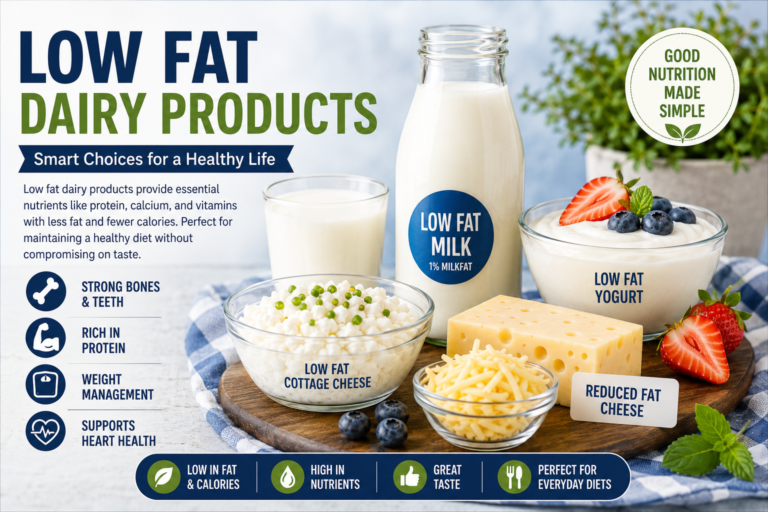
Low Fat Dairy Products When people think about healthy eating, dairy products can sometimes create confusion. Some people avoid them because they are concerned about fat, while others believe dairy is essential for a nutritious diet. The truth is more balanced. Low fat dairy products can provide important nutrients while containing less total fat than their full-fat counterparts.
Milk, yogurt, cottage cheese, and certain cheeses are common examples of low fat dairy products. They can fit into many different eating patterns, from a simple family diet to a carefully planned fitness routine. The key is understanding what each product offers and choosing options that suit your nutritional needs.
For many people, dairy is an easy way to add protein, calcium, vitamin B12, and other nutrients to meals. However, not every dairy product has the same nutritional profile. Flavored yogurts, sweetened milk drinks, and processed dairy foods can contain added sugar or other ingredients that change their overall nutritional value.
This guide explains what low fat dairy products are, their potential benefits, popular choices, how to use them in everyday meals, and what to consider when buying them. The goal is not to label one type of dairy as universally better, but to help you make smarter food choices.
What Are Low Fat Dairy Products?
Low fat dairy products are foods made from milk that contain less fat than traditional full-fat versions. During processing, some of the milk fat is removed. Depending on the product, you may see labels such as low fat, reduced fat, or fat-free. These terms can vary slightly by food category and local labeling rules.
Common examples include low fat milk, reduced-fat yogurt, low fat cottage cheese, and some reduced-fat cheeses. These products still contain many of the naturally occurring nutrients found in milk, although processing can affect the nutritional composition of individual Low Fat Dairy Products.
One reason people choose low fat dairy products is to reduce their overall intake of saturated fat and calories. This can be useful for someone who consumes dairy regularly and wants to manage the amount of fat coming from those foods. However, the best choice depends on the person’s complete diet rather than one ingredient alone.
It is also important to look beyond the words on the front of the package. A low fat product can still contain added sugar, especially when it is flavored. Reading the nutrition facts panel and ingredient list gives you a much clearer picture of what you are actually eating.
Low Fat Milk and Its Nutritional Benefits
Low fat milk is one of the simplest ways to include dairy in a daily diet. It generally provides protein and calcium while containing less milk fat than whole milk. It can be enjoyed on its own, added to cereal, blended into smoothies, or used in cooking.
Protein is one of the useful nutrients found in milk. It contributes to the maintenance and repair of body tissues and can also help make meals more satisfying. For people who enjoy dairy but want a lighter option, low fat milk can be a practical choice.
Milk is also well known for its calcium content. Calcium plays an important role in maintaining normal bones and teeth. It is especially useful as part of an overall diet that includes other calcium-rich foods such as leafy greens, fortified foods, beans, and certain fish.
Another advantage is convenience. You do not need complicated recipes to use low fat milk. A glass with breakfast, a splash in coffee, or an addition to oatmeal can make dairy part of your routine without requiring much preparation.
Low Fat Yogurt: A Versatile Everyday Option
Yogurt is another popular choice among low fat dairy products. It can provide protein, calcium, and other nutrients, while certain varieties also contain live cultures. Its creamy texture makes it useful for breakfast, snacks, sauces, and desserts.
One of the biggest advantages of plain low fat yogurt is its versatility. You can combine it with fresh fruit, nuts, seeds, or oats for a filling breakfast. It can also replace some higher-fat ingredients in homemade dips and dressings.
Greek yogurt deserves special attention because it is often higher in protein than regular yogurt. The exact amount varies between products, so checking the nutrition label is still important. Some Greek yogurt Low Fat Dairy Products are also available in low fat or fat-free versions.
When buying yogurt, be careful with flavored varieties. They may taste delicious, but some contain considerable amounts of added sugar. Plain yogurt gives you more control because you can add naturally sweet foods such as berries, bananas, or apples yourself.
Low Fat Cheese and Cottage Cheese Choices
Cheese can be more complicated because many traditional cheeses contain considerable amounts of fat. Reduced-fat versions can provide an alternative for people who enjoy cheese but want to moderate their fat intake.
Cottage cheese is particularly popular because it can provide protein in a relatively simple form. Low fat cottage cheese can be eaten with fruit, vegetables, whole-grain toast, or crackers. It can also be incorporated into recipes where a creamy texture is desired.
Reduced-fat versions of certain cheeses are available in supermarkets, although their texture and flavor can differ from full-fat varieties. Some people notice a softer or less creamy mouthfeel, while others are perfectly satisfied with the lighter version.
Portion size still matters. Choosing reduced-fat cheese does not automatically mean unlimited portions are appropriate. Cheese can be calorie-dense depending on the variety, so using a reasonable serving can help keep the overall meal balanced.
Health Benefits of Low Fat Dairy Products
One potential benefit of low fat dairy products is that they can provide essential nutrients without contributing as much total fat as comparable full-fat products. For people who eat dairy frequently, making this substitution can be one way to adjust their overall dietary pattern.
Calcium is particularly important because the body needs it for normal bone and dental health. Dairy foods can make it easier for many people to obtain calcium through familiar foods rather than relying entirely on supplements.
Low fat dairy products can also contribute protein to meals and snacks. Protein helps support normal muscle function and tissue maintenance. A yogurt breakfast or cottage cheese snack can therefore be more nutritionally substantial than a snack made mostly from refined carbohydrates.
However, it is important not to view low fat dairy as a magic health food. Overall dietary quality matters more than one food category. Vegetables, fruits, whole grains, legumes, nuts, seeds, and suitable protein sources can all contribute important nutrients to a balanced eating pattern.
Low Fat Dairy Products for Weight Management
People interested in weight management often consider low fat dairy products because reducing fat can reduce the calorie content of certain foods. Fat contains more calories per gram than protein or carbohydrates, so replacing a higher-fat dairy option with a lower-fat alternative can sometimes make calorie management easier.
For example, someone who regularly drinks whole milk could choose low fat milk instead. Similarly, plain low fat yogurt may work as an alternative to a richer dairy-based dessert. These small changes can become meaningful when they are repeated consistently over time.
Still, weight management is not simply about choosing foods labeled “low fat.” A product can be low in fat but high in added sugar or calories. Sweetened dairy drinks and flavored desserts are good examples of why the entire nutrition label deserves attention.
Satiety also matters. Some people find that a moderate amount of fat helps them feel satisfied after eating. For that reason, a balanced diet does not necessarily require eliminating dietary fat. The goal is to choose appropriate portions and maintain an eating pattern that you can realistically follow.
How to Choose the Best Low Fat Dairy Products
Start by checking the nutrition facts panel. Look at calories, protein, total fat, saturated fat, carbohydrates, and added sugars when listed. Comparing two similar products can quickly reveal which one better matches your nutritional goals.
Ingredients matter as well. For everyday use, a shorter and simpler ingredient list may be preferable when comparable products are available. Plain milk and unsweetened yogurt are generally easier to evaluate than highly flavored dairy snacks with numerous added ingredients.
You should also consider protein content. If you are choosing yogurt as a snack or breakfast food, a higher-protein option may keep you satisfied for longer. However, individual needs differ, so there is no single protein number that makes one dairy product perfect for everyone.
Finally, choose products you actually enjoy. Healthy eating becomes difficult when every meal feels like a punishment. If you dislike the taste of a particular reduced-fat product, there is little reason to force yourself to eat it. Another nutritious dairy option may work much better.
Easy Ways to Add Low Fat Dairy Products to Your Diet
Breakfast is an easy place to start. Low fat milk can be added to oatmeal or whole-grain cereal, while plain yogurt can be combined with fruit and seeds. These combinations can create a convenient meal without requiring complicated cooking.
For lunch, yogurt can become the base for a homemade dressing or dip. Cottage cheese can be paired with tomatoes, cucumber, whole-grain crackers, or fresh fruit. These combinations provide different textures and flavors while keeping preparation simple.
Dinner offers plenty of possibilities too. Low fat dairy can be used in soups, sauces, casseroles, and baked dishes. A small amount of reduced-fat cheese can add flavor to vegetables, potatoes, eggs, or whole-grain meals without making the entire dish heavily dairy-based.
Snacks are another practical opportunity. A bowl of plain yogurt with berries, a glass of low fat milk, or a serving of cottage cheese can be a convenient choice between meals. Pairing dairy with fruit, vegetables, whole grains, or nuts can create a more balanced snack.
Low Fat vs. Full Fat Dairy Products
The debate between low fat and full-fat dairy products is more complicated than simply calling one healthy and the other unhealthy. Both can provide valuable nutrients, and the better choice can depend on a person’s dietary pattern, preferences, and nutritional goals.
Low fat versions generally contain less total fat and fewer calories than their full-fat counterparts. This can be useful for people who want to reduce their overall calorie intake or moderate saturated fat consumption.
Full-fat dairy can have a richer texture and stronger flavor, which may make it more satisfying for some people. It can also be useful when incorporated into a balanced diet in appropriate portions. The presence of fat itself does not automatically make a food unhealthy.
The most sensible approach is to consider the whole meal and the whole diet. Someone who eats plenty of nutritious foods and enjoys a small serving of full-fat cheese may have a balanced diet. Another person may prefer low fat dairy because it better fits their calorie or fat goals.
Are Low Fat Dairy Products Good for Everyone?
For many healthy adults, low fat dairy products can be a convenient part of a balanced diet. They offer familiar foods that can provide protein and minerals while allowing people to moderate their intake of dietary fat.
However, individual dietary needs are different. People with milk allergies need to avoid milk proteins, while individuals with lactose intolerance may need lactose-free dairy products or suitable alternatives. A reduced-fat label does not remove lactose or milk proteins.
Children and teenagers also have different nutritional needs from adults. During periods of growth, overall energy and nutrient requirements can be different. Parents should therefore consider age-appropriate dietary guidance rather than assuming that every low fat product is automatically the best choice.
People with specific medical or nutritional concerns should also consider professional guidance. A registered dietitian or qualified healthcare professional can help tailor dietary choices to individual circumstances, especially when several dietary restrictions are involved.
Common Mistakes When Buying Low Fat Dairy Products
One common mistake is assuming that “low fat” means “low calorie.” It does not always work that way. Manufacturers may add sugar, starches, or other ingredients to improve taste and texture after reducing fat.
Another mistake is ignoring portion size. Even nutritious foods contribute calories when consumed in very large amounts. Measuring or becoming familiar with standard serving sizes can make it easier to understand how much you are actually consuming.
Some shoppers also focus only on fat and forget about protein. Two low fat yogurts may have very different protein contents. If you are buying yogurt as a substantial snack, comparing protein and added sugar can be more useful than looking at fat alone.
Finally, people sometimes choose products they do not enjoy simply because they believe the label makes them healthier. Sustainable nutrition is about making choices you can maintain. Taste, convenience, affordability, and nutritional quality all deserve consideration.
Final Thoughts on Low Fat Dairy Products
Low fat dairy products can be useful additions to a balanced eating pattern. Milk, yogurt, cottage cheese, and reduced-fat cheeses offer convenient ways to obtain nutrients such as protein and calcium while helping people moderate their intake of dairy fat.
The healthiest choice is not necessarily the product with the lowest possible fat content. Instead, consider the complete nutrition label, serving size, ingredients, added sugar, protein, and how the food fits into your overall diet.
Plain and minimally sweetened options are often particularly practical because they allow you to control what goes into the meal. Fresh fruit, whole grains, nuts, seeds, and vegetables can complement dairy foods and create more satisfying combinations.
Ultimately, low fat dairy products are one tool rather than a complete nutrition strategy. A varied diet built around nutrient-rich foods, sensible portions, and consistent eating habits is much more important than obsessing over a single nutrient. Choose dairy products that fit your needs, enjoy them in reasonable portions, and focus on the bigger picture of healthy eating.
YOU MAY ALSO READ

wellcome to glamnetworth i am rimsha razzaq and AI-Powered SEO , and containt writer with four years of experince i help website rank higher, grow traffic, and look amazing . my goal is to make SEO and web design simple and effective for everyone . Lets achieve more together|