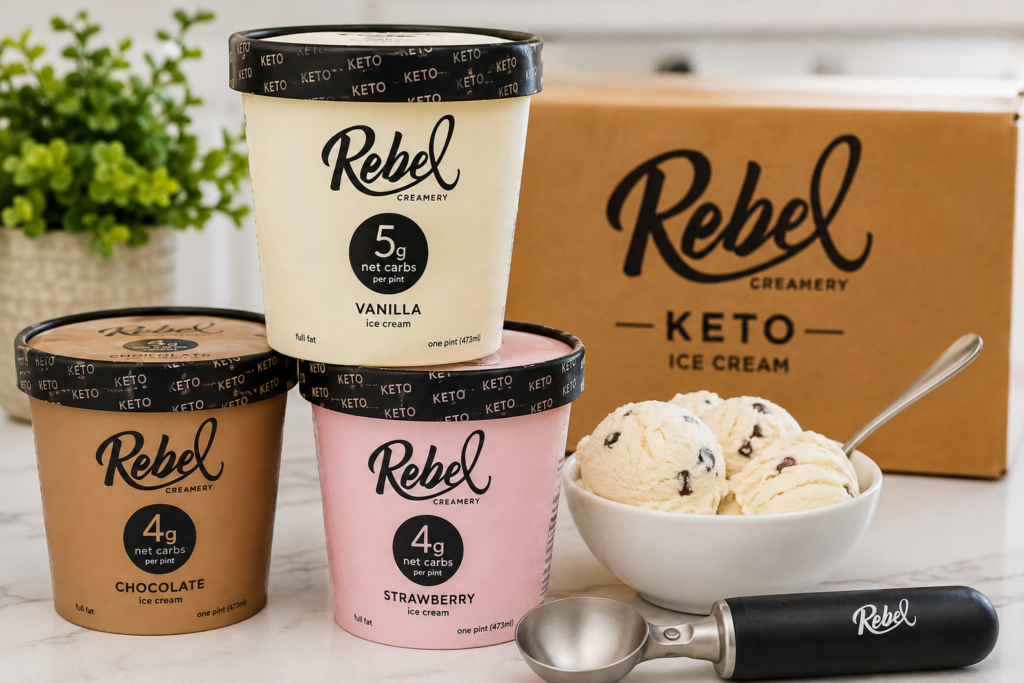
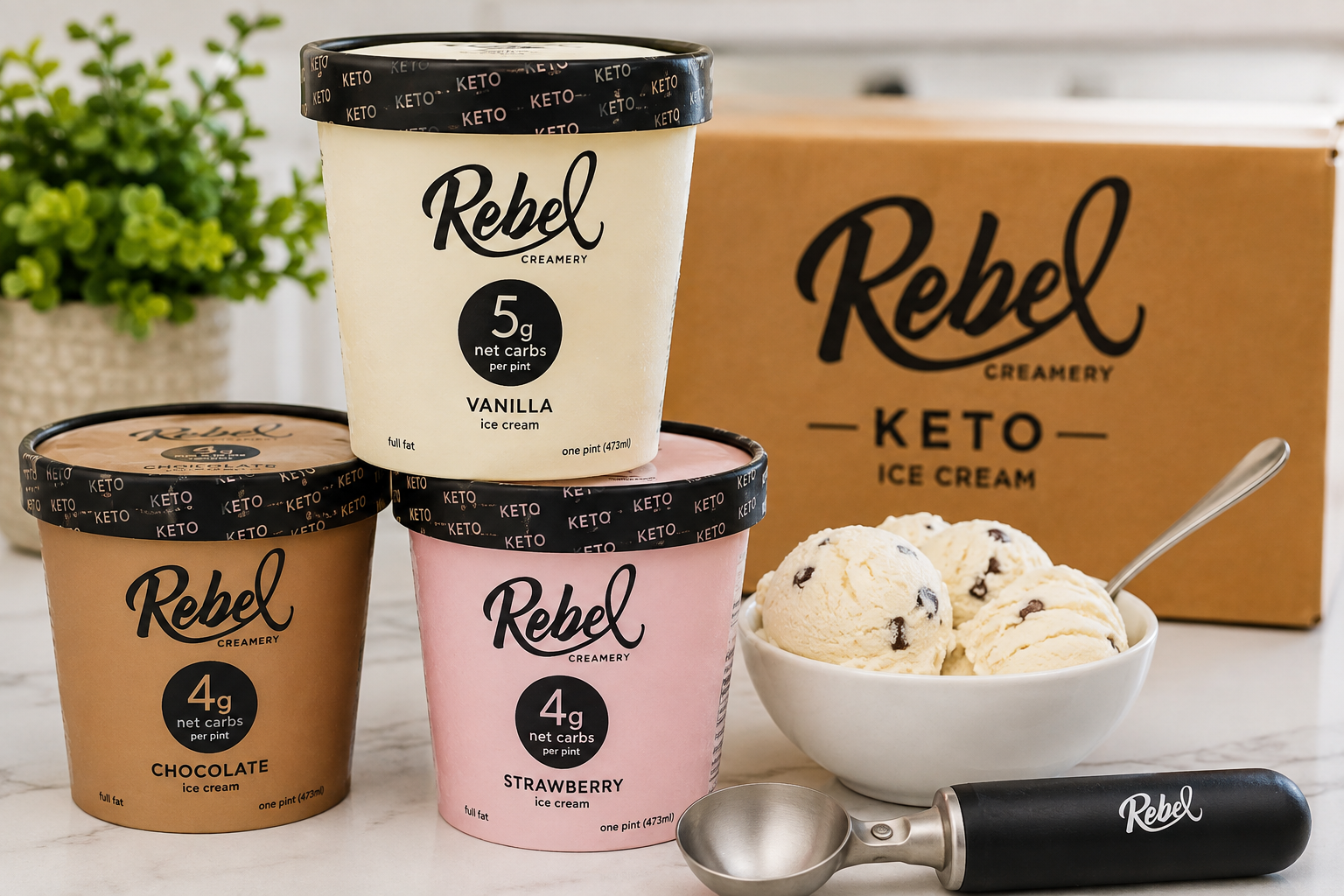

Rebel Ice Cream is a Utah-based ice cream company that became widely recognized for bringing low-carb and keto-friendly ice cream into mainstream grocery shopping. Founded with the idea that people following a low-carbohydrate lifestyle should not have to completely give up ice cream, Rebel Ice Cream built its identity around rich, creamy desserts designed with lower net carbohydrates than conventional ice cream.
The company attracted attention because its products attempted to solve a simple problem: traditional ice cream is usually loaded with sugar, while many diet-friendly alternatives sacrifice texture and flavor. Rebel Ice Cream entered that gap with products aimed at consumers who wanted a more traditional ice cream experience while following keto or low-carb eating patterns.
However, Rebel Creamery LLC is now known for more than its products. In 2026, the company became involved in a major legal dispute with Van Leeuwen Ice Cream over packaging design. A federal judge ultimately ruled against Rebel and awarded Van Leeuwen $23.785 million in Rebel’s profits from infringing ice cream pints.
That legal development has dramatically changed the company’s story. Recent reporting indicates that Rebel Creamery filed for Chapter 11 bankruptcy after the judgment, making its future an important question for customers, retailers, investors, and anyone researching the company.
What Is Rebel Creamery LLC?
Rebel Ice Cream is an American specialty ice cream business associated with Park City, Utah. Business records identify Austin Archibald as a key principal and list the company within the packaged ice cream and specialty food industries. The company’s listed address is in Park City, Utah.
The brand was created around a straightforward concept: make ice cream that fits into a low-carb lifestyle without making consumers feel as though they are eating a compromise product. That positioning helped Rebel Ice Cream stand apart from traditional frozen dessert companies and connected it with the growing keto community.
Rebel’s “REBEL” trademark was registered for ice cream in 2020, reflecting the company’s effort to establish a recognizable identity in the competitive frozen dessert market. Trademark records show the registration covered ice cream goods under the Rebel Ice Cream name.
For consumers, the name Rebel Ice Cream Creamery became particularly associated with keto ice cream. Reviews and discussions from the keto community frequently focused on its creamy texture, relatively low carbohydrate content, and ability to provide a more conventional ice cream experience than some other diet-oriented alternatives.
How Rebel Ice Cream Creamery Started
Rebel Ice Cream Creamery was founded by Austin and Courtney Archibald in Utah in September 2017. Court records describing the company’s history state that Austin had graduated from Harvard Business School shortly before launching the company and had developed an interest in the keto lifestyle.
The original idea came from a personal frustration. Austin was following a ketogenic diet and noticed that people in online keto communities were discussing how much they missed foods such as ice cream. Instead of simply accepting that limitation, he began experimenting with making keto ice cream himself.
That experimentation eventually turned into a commercial business concept. According to the court record, the founders worked toward developing an ice cream product that could deliver the indulgent qualities consumers expect from ice cream while keeping carbohydrates much lower. The company also raised initial funding through Kickstarter.
This origin story is important because it explains why Rebel’s early marketing felt closely connected to the keto movement. Rather than beginning as a conventional ice cream company and later adding a diet line, Rebel Ice Cream was built around the idea that low-carb consumers represented an underserved market.
Why Rebel Creamery Became Popular
Rebel entered the market at an interesting moment. The ketogenic diet had developed a large online following, and consumers were increasingly searching for products that could fit their preferred eating patterns. Ice cream was an especially attractive category because it was a familiar comfort food that many people did not want to eliminate completely.
One of Rebel’s biggest selling points was texture. Keto products can sometimes struggle to reproduce the creamy mouthfeel of traditional ice cream because reducing sugar changes how frozen desserts behave. Rebel Ice Cream focused heavily on creating a richer experience that could feel closer to conventional premium ice cream.
Independent reviews helped reinforce that reputation. Keto-focused publication Keto-Mojo reviewed Rebel Ice Cream and highlighted its creamy texture, low net-carb positioning, and relatively high fat content. The review described the product as a strong option for people following a ketogenic lifestyle.
Consumer discussions also showed that the product developed a loyal following. Some keto consumers praised the flavor and texture, although price and availability were mentioned as drawbacks. Other users recommended allowing the frozen product to soften for several minutes before eating because the texture could improve significantly after sitting outside the freezer.
Rebel Creamery and the Keto Ice Cream Market
The rise of Rebel Ice Cream illustrates how changing dietary preferences can create entirely new product categories. Traditional ice cream companies have historically competed around flavor, indulgence, ingredients, and brand recognition. Rebel Ice Cream added another dimension: carbohydrate content.
For keto consumers, net carbohydrates became a particularly important purchasing consideration. Instead of simply asking whether an ice cream tasted good, shoppers were also interested in sugar content, fiber, sweeteners, fat, serving size, and how a product could fit into their daily carbohydrate targets.
That distinction helped Rebel Ice Cream create a recognizable niche. Its products were not marketed simply as ordinary ice cream. The brand’s identity was closely connected to low-carb eating and consumers who wanted dessert without the carbohydrate load associated with conventional ice cream.
Still, “keto-friendly” does not automatically mean that a product is appropriate for everyone or that it should be considered a health food. Nutrition depends on the full ingredient list, serving size, individual dietary needs, and overall eating pattern. Consumers should therefore read the current nutrition label rather than relying only on marketing language.
Rebel Creamery Products and Brand Identity
Rebel Ice Cream became particularly associated with packaged pints of low-carb ice cream. The product range included flavors designed to appeal to familiar ice cream preferences, giving consumers alternatives to traditional chocolate, vanilla, peanut butter, and other dessert profiles.
The company’s strategy was clever from a consumer perspective because it did not require shoppers to learn an entirely new category. A customer could walk into a grocery store looking for ice cream and choose a Rebel Ice Cream pint based on dietary preference while still thinking about familiar concepts such as flavor, creaminess, and indulgence.
The brand also developed recognition through its distinctive visual presentation. Packaging became an important part of Rebel’s identity, but that same packaging eventually became the center of one of the company’s biggest legal problems.
This is where Rebel’s story becomes considerably more complicated. Product innovation helped the company build a following, but branding and packaging decisions ultimately created a serious dispute with another growing ice cream company.
The Van Leeuwen Packaging Lawsuit
Van Leeuwen Ice Cream LLC sued Rebel Ice Cream Creamery in 2021 over the appearance of Rebel’s ice cream packaging. The dispute concerned trade dress, a legal concept that can protect distinctive visual elements of a product or business when those elements identify the source of the goods.
Van Leeuwen argued that Rebel’s packaging was too similar to its own distinctive visual identity. The court described Van Leeuwen’s packaging as featuring pastel, monochrome cardboard pints, minimalist design elements, and black cursive script. Rebel’s packaging used a similar overall visual approach.
The case was not merely about whether two ice cream containers looked somewhat alike. The court considered whether the overall combination of visual elements created a likelihood of consumer confusion and whether Rebel’s use of those elements violated federal and New York law.
After a bench trial, U.S. District Judge Eric R. Komitee ruled that Rebel Ice Cream was liable for trade dress infringement, unfair competition, and dilution. The court also rejected Rebel’s argument that it qualified for a good-faith defense based on being a remote user.
The $23.785 Million Judgment Against Rebel
The July 16, 2026 ruling became the most consequential event in Rebel Ice Cream Creamery’s corporate history. The federal court ordered Rebel to pay Van Leeuwen $23.785 million in profits associated with the infringing ice cream pints.
The judgment also included injunctive relief. Rebel Ice Cream was prohibited from continuing to sell products using trade dress that could be confused with Van Leeuwen’s protected design and was required to redesign its packaging. In other words, the company faced both a significant financial obligation and a major branding challenge.
The judge’s findings went beyond an accidental resemblance. The decision concluded that the infringement was intentional and rejected Rebel’s position that it had not knowingly copied Van Leeuwen’s design. Reuters reported that the court found Rebel’s explanation unconvincing and concluded that the similarities were not simply coincidental.
For a consumer brand, this type of ruling can be especially damaging because packaging is part of the product’s identity. Changing it means more than printing new labels. It can affect manufacturing, inventory, retailer relationships, marketing materials, customer recognition, and the cost of replacing existing packaging.
Why the Packaging Dispute Matters
Packaging may look like a minor part of an ice cream business, but it can be extremely important in a crowded supermarket freezer. Consumers often make purchasing decisions quickly, and familiar colors, fonts, shapes, and layouts can influence what catches their attention.
Trade dress law recognizes that certain combinations of visual features can become strongly associated with a particular brand. The central issue is not simply whether one company owns a color or a font. Instead, courts can examine the overall commercial impression created by a product’s presentation.
The Rebel Ice Cream case demonstrates why growing food companies need to treat branding as seriously as recipes and manufacturing. A successful design can help a young company stand out, but if that design is too close to an established competitor’s identity, it can create substantial legal exposure.
For startups, this lesson is especially valuable. A company can have an excellent product and a passionate customer base yet still face serious problems if its visual identity has not been properly researched. Branding decisions should therefore involve careful trademark and trade dress analysis before products reach major retailers.
Did Rebel Creamery File for Bankruptcy?
As of August 16, 2026, recent reporting indicates that Rebel Ice Cream Creamery has filed for Chapter 11 bankruptcy following the $23.785 million judgment. The company reportedly listed between $10 million and $50 million in both assets and liabilities.
The bankruptcy filing followed an appeal that Rebel Ice Cream filed on August 12, according to the same report. Chapter 11 generally provides a legal framework through which a company can reorganize its financial affairs while dealing with creditors and other obligations.
This development does not automatically mean that the Rebel Ice Cream brand has disappeared. Bankruptcy and business closure are not necessarily the same thing. A Chapter 11 case can involve restructuring, asset sales, negotiations with creditors, changes in operations, or other outcomes depending on the case.
However, the situation creates significant uncertainty for consumers. Retail availability, product production, online ordering, packaging changes, and the future ownership or structure of the brand can all be affected by the bankruptcy process. Customers should rely on current retailer listings and official company communications when checking whether a particular Rebel product is available.
What Happened to Rebel Creamery’s Retail Presence?
Before the current financial crisis, Rebel had developed a substantial retail footprint. Recent reporting says its products were distributed through major retailers including Walmart and Target. That kind of distribution represented an important milestone for a specialized ice cream company because it placed Rebel products in front of consumers far beyond the original keto community.
National retail distribution can provide enormous exposure, but it also increases operational complexity. Food companies must manage manufacturing, cold-chain logistics, inventory, packaging, retailer requirements, promotions, and consumer demand across multiple markets.
The packaging judgment potentially complicated all of these areas. If products had to be redesigned, existing packaging inventory could become difficult to use, while new packaging would require additional design, production, and logistical work.
The bankruptcy filing adds another layer of uncertainty. Whether Rebel continues operating in substantially the same form, restructures, sells assets, or changes its product strategy will depend on the proceedings and decisions made by the company and its creditors.
What Rebel Creamery’s Story Teaches Food Startups
Rebel Creamery’s history offers an unusually useful lesson for entrepreneurs. The company identified a real consumer problem, created a product around that problem, developed a recognizable niche, and reached major retailers. Those are significant achievements for a relatively young food company.
At the same time, the legal dispute shows that innovation is not limited to the recipe. Every part of a consumer product matters, including its name, logo, packaging, advertising language, website, photography, and overall visual identity.
The company’s experience also demonstrates how quickly business risks can change. A brand can be known primarily for product innovation one year and become associated with litigation the next. Entrepreneurs therefore need to consider legal, financial, operational, and marketing risks alongside product development.
Perhaps the biggest lesson is that differentiation should be genuine. A company needs to make it immediately clear why its product is different, rather than relying too heavily on visual similarities with another successful brand. Strong originality can become one of a startup’s most valuable long-term assets.
The Future of Rebel Creamery LLC
The future of Rebel Creamery LLC remains uncertain following the bankruptcy filing and the major judgment against the company. The brand’s history, however, shows that it succeeded in creating awareness around a specific consumer need: better low-carb ice cream.
Whether the company continues under its existing structure or emerges in another form will depend on the bankruptcy process. Its products, intellectual property, retail relationships, and other assets could all become relevant as the company reorganizes.
For existing customers, the biggest question is simple: will Rebel ice cream remain available? At this point, availability can change quickly, so consumers should check current retailer inventory rather than assuming that a product has permanently disappeared.
For the broader food industry, Rebel’s story is likely to remain relevant even if the company changes dramatically. It demonstrates both the opportunity and the risk involved in building a niche consumer brand. A strong idea can grow rapidly, but legal and financial challenges can become equally powerful forces.
Final Thoughts on Rebel Creamery LLC
Rebel Creamery LLC began with a relatable idea: people following a low-carb lifestyle still wanted to enjoy ice cream. Austin and Courtney Archibald turned that idea into a company that gained attention among keto consumers and eventually expanded into major retail channels.
The company’s journey was not simply a story about frozen desserts. It became a case study in food entrepreneurship, niche marketing, retail expansion, intellectual property, and corporate risk.
The 2026 legal ruling against Rebel dramatically changed the picture. A federal judge found the company liable for trade dress infringement and ordered a $23.785 million profits award, along with requirements concerning its packaging.
The subsequent Chapter 11 filing has made the company’s future difficult to predict. While bankruptcy does not necessarily mean the immediate end of a brand, it signals that Rebel is facing one of the most challenging periods in its history.
For consumers searching for “Rebel Creamery LLC,” the key takeaway is that the company has a fascinating history but is currently undergoing major changes. Its rise demonstrates how a focused product can build a powerful niche, while its legal battle shows why originality, intellectual property planning, and careful brand development are essential for any growing food business.
YOU MAY ALSO READ

wellcome to glamnetworth i am rimsha razzaq and AI-Powered SEO , and containt writer with four years of experince i help website rank higher, grow traffic, and look amazing . my goal is to make SEO and web design simple and effective for everyone . Lets achieve more together|